
No puedo dormir, Me duele el estomago,
Estoy algo inquieto,
Y ya no puedo fumar.
De entre las nubes,
Como los rayos de luz,
Caen miles de lagrimas,
Llorando por algo.
Silencio,
La espera por mañana,
será suficiente excusa,
para volver a volar.
No puedo dormir, Me duele el estomago,
Estoy algo inquieto,
Y ya no puedo fumar.
De entre las nubes,
Como los rayos de luz,
Caen miles de lagrimas,
Llorando por algo.
Silencio,
La espera por mañana,
será suficiente excusa,
para volver a volar.

Sacar la cruda con cerveza tiene muchas cosas positivas, sin embargo algunos de los efectos no positivos por no decir negativos, es que es muy posible que uno pueda volverse a emborrachar. Pero en realidad no es algo malo ni grave, solamente es parte importante del tiempo que parece detenerse. Es tan distinto el tiempo que uno piensa y el que corre en realidad.
Señores es buen momento para hablar con claridad, claro que tenemos superpoderes, y que en nuestras manos se escriben las siguientes pinceladas de nuestra vida, nosotros creamos nuestro futuro, me queda tan claro que ya no puedo más callarlo.
Ayer tuve más de una premoniciónn sobre el mundo que me espera y que quiero vivir, emprendimos un viaje desde el viernes y hoy domingo no me puedo bajar de la alfombra mágica voladora. Al final sé que todo está estallando por dentro y las luces de colores estan por salir.
Entre tantos ojos estan los ojos que miran absolutamente todo. Pero en vez de provocarme miedo me provocan preguntar que es lo que estan mirando. A un segundo de desaparecer y dejar de existir quiero confesar que el suave frio en mi s piernas me recuerda que aun soy un ser terrenal y que no puede vivir sin un poco de realidad de la que sabe a chocolate.
http://www.ustream.tv/flash/live/1/945807Broadcasting Live with Ustream.TV
Checa el simulador del sorteo aquí
(by:Wired.com)
Ever wanted to have a robot to do your research for you? If you are a scientist, you have almost certainly had this dream. Now it’s a real option: Eureqa, a program that distills scientific laws from raw data, is freely available to researchers.
The program was unveiled in April, when it used readouts of a double-pendulum to infer Newton’s second law of motion and the law of conservation of momentum. It could be an invaluable tool for revealing other, more complicated laws that have eluded humans. And scientists have been clamoring to get their hands on it.
“We tend to think of science as finding equations, like E=MC2, that are simple and elegant. But maybe some theories are complicated, and we can only find the simple ones,” said Hod Lipson of Cornell University’s Computational Synthesis Lab. “Those are unreachable right now. But the algorithms we’ve developed could let us reach them.”
Eureqa is descended from Lipson’s work on self-contemplating robots that figure out how to repair themselves. The same algorithms that guide the robots’ solution-finding computations have been customized for analyzing any type of data.
The program starts by searching within a dataset for numbers that seem connected to each other, then proposing a series of simple equations to describe the links. Those initial equations invariably fail, but some are slightly less wrong than others. The best are selected, tweaked, and again tested against the data. Eureqa repeats the cycle over and over, until it finds equations that work.
What took Newton years to calculate, Eureqa returned in a few hours on a decent desktop computer. Lipson and other researchers hope Eureqa can perform the same wizardry with data that now defies scientists, especially those working at the frontiers of biology, where genomes, proteins and cell signals have proven fantastically difficult to analyze. Their interactions appear to follow rules that traditional analytical methods can’t easily reveal.
“There’s a famous quote by Emerson Pugh: ‘If the human brain were so simple that we could understand it, we would be so simple that we couldn’t.’ I think that applies to all of biology,” said John Wikswo, a Vanderbilt University biophysicist who’s using the Eureqa engine in his own lab. “Biology is complicated beyond belief, too complicated for people to comprehend the solutions to its complexity. And the solution to this problem is the Eureqa project.”
Lipson made Eureqa available for download early in November, after being overwhelmed by requests from scientists who wanted him to analyze their data. In the meantime, he and Michael Schmidt, a Cornell University computational biologist responsible for much of Eureqa’s programming, continue to develop it.
An ongoing challenge is the tendency of Eureqa to return equations that fit data, but refer to variables that are not yet understood. Lipson likened this to what would happen if time-traveling scientists presented the laws of energy conservation to medieval mathematicians.
“Algebra was known. You could plug in the variable, and it would work. But the concept of energy wasn’t there. They didn’t have the vocabulary to understand it,” he said. “We’ve seen this in the lab. Eureqa finds a new relationship. It’s predictive, it’s elegant, it has to be true. But we have no idea what it means.”
Lipson and Schmidt are now devising “algorithms to explain what our algorithm is finding,” perhaps by relating unknown concepts to simpler, more familiar terms. “How do you explain something complicated to a child? That’s what it involves,” said Lipson. “It’s machine teaching, rather than machine learning.”
One set of incomprehensibly meaningful discoveries comes from Eureqa’s analysis of cellular readouts gathered by Gurol Suel, a University of Texas Southwestern molecular microbiologist who studies how cells divide and grow. But even if Eureqa can’t yet explain what it found, it’s still useful, said Suel.
“You can use this as a starting point for further investigations. It lets you think about new ideas of what’s going on in the cell, and generate new hypotheses about the properties of biological systems,” said Suel.
Sometimes Eureqa will require more data than it’s given before finding answers. In those cases, the program may be able to identify information gaps, and recommend experiments to fill them.
That functionality is included in the latest build of the program, and is being taken even further in a new Lipson-Wikswo project. They’re hooking a version of Eureqa directly to Wikswo’s experimental gadgetry.
“The program is going to adjust the valves, feeding different nutrients and toxins to the cells,” and it does this faster than any researcher, said Wikswo. “It comes up with the equations, plus the experiments needed to come up with the equations. It’s Eureqa on steroids.”
According to Wikswo, who studies the effects of cocaine on white blood cells, Eureqa can propose experiments that researchers would have difficulty imagining.
“In most of science, you try to keep everything constant except for one variable. You turn one knob at a time, and see how the system responds. That’s wonderful for linear systems,” he said. “But most biology is complex and non-linear. Emergent behaviors are very hard to understand unless you turn many knobs at a time, and we can’t figure out which knobs to turn. So we’re going to let Eureqa pick them.”
The Cornell team hasn’t counted downloads of their program, but it’s likely being used by researchers outside biology. As long as data fits on a spreadsheet, Eureqa can analyze it.
“In the past year, people have contacted us with some wild application ideas,” said Schmidt. “Everything from predicting the stock market to modeling the herding of cows.”
Images: 1) Hod Lipson running Eureqa in his office. 2) Diagrams of information flow through one of Lipson’s self-repairing robots (left) and Eureqa (right).
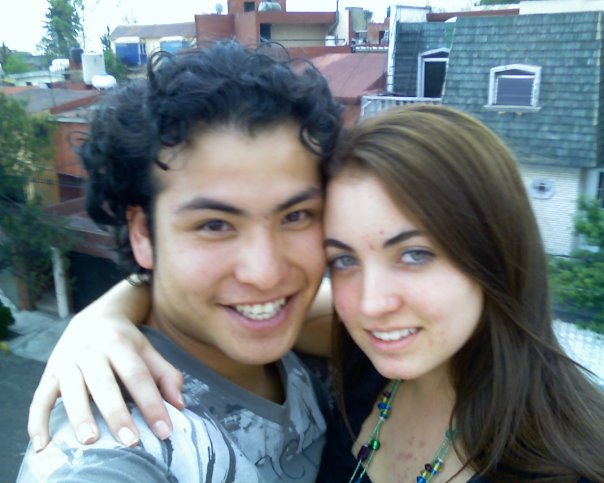
Sus hermosos luceros turquesa se quebraron,
en rios de tristeza y angustia fugaz,
sus alas se abrieron y en sus manos se quedaron,
sin fuerzas en las garras del dolor voraz.
Su hermoso rostro no iluminó los caminos,
su tristeza de nubes lleno el mar,
con ella millones de sueños perdidos,
no quedo ya el rostro de las madres al amar.
Un angelito de ojos turquesa esta llorando,
a sus manitas les duele el tiempo pasar,
en una nube esponjosa me está esperando,
no sabe que en mis sueños por siempre le he de abrazar.
En un punto cercano a los dos mundos,
donde el cielo y la tierra se quieren mirar,
entre colores claros y cariños profundos,
el consuelo del alma podrás alcanzar.
Llora angel angelito,
recuerda que el tiempo no puede parar,
si de ti no nace otra vez la fuerza,
todo en el mundo universo tendrá que acabar.
 Hoy me caí de los brazos de Dios,
y me he golpeado la espalda al aterrizar,
me duelen los ojos, los brazos y mis lagrimas al caer,
siento los huesos rotos y el espiritú quebrado.
Pero me das un abrazo que me cura los dolores,
tus besos me saben a la medicina de mi alma,
me pones un manto protector,
que se desvanece cuando te vas.
Son tantos los clavos de esta trampa,
que si respiro me entierro miles por doquier,
si guardo la respiración me asfixia en la espera eterna por tu piel.
Pero mañana cuando salga el Sol,
y las cicraticez se cierren,
cuando los niños griten y canten en el parque.
y los viejos sonrian condescendientes,
secarán mis lagrimas definiendo un nuevo día.
Con el carácter más grande,
y los sueños gigantescos,
con tu mano y la mia fundida por siempre,
descansarán todas nuestras pesadillas.
Cuando salga el Sol.
(By: Mark Zuckerberg)
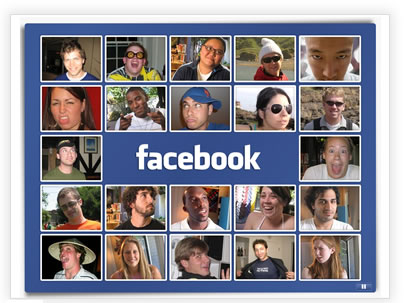
Facebook acaba de alcanzar los 350 millones de usuarios y vamos a hacer algunos cambios para dar un mejor servicio a esta comunidad en crecimiento. Para leer la carta de Mark, haz clic aquí.
A todos los usuarios de Facebook:
Este ha sido un gran año, durante el cual hemos hecho del mundo un lugar más abierto y conectado. Gracias a vuestra ayuda, más de 350 millones de personas utilizan Facebook en todo el mundo para compartir sus vidas online.
Para que esto fuera posible, nos hemos centrado en daros las herramientas necesarias para compartir y controlar vuestra información. Desde la primera versión de Facebook, creada hace cinco años, hemos desarrollado herramientas que os ayudan a controlar qué información compartís y con qué individuos o grupos. Pero esta tarea no está acabada y nuestros esfuerzos por mejorar la privacidad continúan.
El modelo actual de privacidad de Facebook gira en torno a las “redes”, es decir, comunidades vinculadas con tu centro de estudios, tu empresa o tu región. Este planteamiento funcionaba bien cuando la mayoría de usuarios de Facebook eran estudiantes, ya que era lógico que quisieran compartir contenido con compañeros de estudio.
Con el paso del tiempo empezamos a recibir peticiones para que añadiéramos redes para empresas y regiones. En la actualidad, tenemos redes incluso para países enteros, como India o China.
No obstante, puesto que Facebook ha seguido creciendo, algunas de estas redes reginales tienen hoy en día millones de miembros, y hemos llegado a la conclusión de que este formato no es el más conveniente para que nuestros usuarios tengan el control de su privacidad. Casi la mitad de todos los usuarios de Facebook pertenecen a una red regional, por lo que se trata de un tema importante para nosotros. Si construimos un sistema mejor, más de 100 millones de personas tendrán aún más control sobre su información.
Nuestro plan es eliminar totalmente las redes regionales y crear un modelo más simple para el control de la privacidad mediante el que podáis decidir si el contenido estará disponible para vuestros amigos, los amigos de vuestros amigos o todo el mundo.
Hemos añadido una función que muchos nos habéis pedido en más de una ocasión: la posibilidad de controlar quién ve los contenidos que creáis o cargáis en Facebook uno por uno. También vamos a satisfacer otra petición que hemos recibido de muchos de vosotros: simplificar la página de configuración de la privacidad combinando varias de las opciones. Si recordáis, empezamos a hablar de estos planes en julio pasado. Si queréis más información, podéis consultar el siguiente mensaje de blog.
Esta actualización eliminará las redes regionales y creará algunas opciones nuevas, por lo que en las próximas semanas os pediremos que reviséis y actualicéis vuestra configuración de privacidad. Os aparecerá un mensaje que explicará los cambios y os llevará a una página donde podréis actualizar la configuración. Cuando hayáis terminado, os mostraremos una página de confirmación para que podáis comprobar que habéis seleccionado las opciones que más se ajustan a vuestras preferencias. Como siempre, podéis cambiar la configuración cuando queráis.
Hemos trabajado muy duro para ofreceros el tipo de control que creemos es el más adecuado, pero también entendemos que las necesidades de cada persona son diferentes. Por eso, a pesar de que os sugeriremos una configuración basada en vuestro nivel de privacidad actual, la mejor manera de encontrar la configuración ideal para vosotros es que leáis todas las opciones y la personalicéis según vuestras preferencias. Os animo a todos a que hagáis esto y a que reflexionéis acerca de con quién estáis compartiendo información.
Gracias a todos por hacer de Facebook lo que es hoy y por contribuir a que el mundo sea un lugar más abierto y conectado.
Mark Zuckerberg

Facebook announced this morning at a briefing in which they covered off recent site and user stats in London, that The Guardian newspaper will be integrating Facebook’s Connect across their site in the near future.
It’s a feature that has has to an extent been left to the blogging community and various web based companies such as Digg but now looks to be adopted by more mainstream media services and companies.
Globally Facebook has recorded 25,000 implementations of Connect which on the face of is a minimal amount considering they also announced Facebook now has 350 million users worldwide.
With the UK now having 23 million of those, there is a substantial audience which would be able to conveniently login to services such as the one the Guardian will be introducing.
Users data being seems to be compromised on a common occurrence of late and websites being able to pull a users data from a central location such as Facebook would surely increase security.
The Guardian Jobs third party databases were hacked back in October and it would be great to see the newspaper using this as an opportunity to use Facebook Connect for this and other services instead of just commenting.
Facebook also went through various other statistics and targets including CEO Mark Zuckerberg wanting to reach 1 billion users.
The colossal amount of usage the fan pages are seeing is being met with equal investment in the development of them by brands such as the ones feature here. The ability to communicate so closely with users exposed and using the brand is unparalleled by any other service at current.

| Espero que encuentren esto útil, saludos | |||||||
| Para poder tener una triple condicion o triple IF | |||||||
| o triple SI en español | |||||||
| lo que tienes que hacer es: | |||||||
| tener 3 variables distintas en este caso: | |||||||
| 1.-cars or vans | |||||||
| 2.-diesel or magna | |||||||
| 3.-public or private | |||||||
| quien te pide el triple IF te tiene que dar una regla | |||||||
| como en este caso: | |||||||
| Rule: cars, with diesel and private needs a check up | |||||||
| entonces comienzas la formula de la siguientes forma: | |||||||
| =SI( | |||||||
| y te pide la prueba logica, que es: | |||||||
| la celda donde esta la primer categoria en este caso es D9 | |||||||
| y esta debe ser igual a «car» (en excel cuando | |||||||
| hagas referencia a letras debes | |||||||
| ponerlas entre comillas). La prueba logica queda F9=»Car» | |||||||
| Una vez que pones la prueba logica, pones coma | |||||||
| y te pide que hacer en caso | |||||||
| de que la prueba sea positiva osea: si es car entonces que hace | |||||||
| ahí pones el siguiente SI | |||||||
| entonces te pide la siguiente prueba logica | |||||||
| que debe ser si la siguiente columna cumple | |||||||
| con la regla dada, en este caso es que sea diesel, entonces | |||||||
| pones E9=»diesel» pones coma y te pide | |||||||
| que hacer en caso de que la prueba logica | |||||||
| sea positiva y ahí pones el tercer SI. | |||||||
| Vuelves a poner la prueba logica que en este | |||||||
| caso es F9=»private» y en respuesta correcta | |||||||
| «check up» que es lo que pide la regla, pones | |||||||
| coma y te pide el valor en caso de que sea falso | |||||||
| y ahí pones «ok». | |||||||
| Como todo lo anterior es solo en caso de que el | |||||||
| valor de la primera condicion sea verdadero | |||||||
| (que sea un auto, que tenga diesel y que sea | |||||||
| privado) debes poner, el valor falso | |||||||
| que es «ok» para las dos pruebas logicas que | |||||||
| dejamos abiertas como se muestra en la formula: | |||||||
| Esta es la formula completa como debe quedar con triple IF | |||||||
| =SI(D9=»car»,(SI(E9=»diesel»,SI(F9=»private»,»Check up»,»ok»),»ok»)),»ok») | |||||||
| Rule: cars, with diesel and private needs a check up | |||||||
| Type | Gasoline | Status | Query | Aquí esta la | |||
| formula aplicada | |||||||
| Car | Diesel | private | 
|
||||
| Van | Magna | private | ok | ||||
| Car | Diesel | public | ok | ||||
| Van | Magna | public | ok | ||||
| Car | Diesel | private | Check up | ||||
| Van | Magna | private | ok | ||||
| Car | Diesel | private | Check up | ||||
| Van | Magna | private | ok | ||||
| Car | Diesel | public | ok | ||||
| Van | Magna | public | ok | ||||
| Car | Diesel | private | Check up | ||||
| Van | Magna | public | ok | ||||
| Car | Diesel | private | Check up | ||||
| Van | Magna | public | ok | ||||
| Car | Diesel | private | Check up | ||||
| Van | Magna | public | ok | ||||
| Car | Diesel | private | Check up | ||||
 EDI TIMES
