Forget it.
(poem coming soon)
Forget it.
(poem coming soon)
It ain’t easy being cheesy. Mr. Cheetah first made this sage observation back in the ’80s, and it certainly still applies to the manufacture of his favorite bright-orange snack. Turning a hunk of cornmeal into a knobby Cheeto may take only a few minutes, but it requires a fine-tuned industrial dance that leaves no room for error. Frito-Lay’s quality-control folks will not tolerate anything less than maximum crunchiness.

0:00 to 1:00
Gritty cornmeal stored in a silo is pumped about 100 yards through a pneumatic tube into a Cheetos manufacturing plant. (Frito-Lay has 14 fried-Cheeto plants in 11 states.) The cornmeal then enters a giant hopper  , where it awaits its rapid transformation into one of America’s most beloved snacks.

1:00 to 1:10
Gobs of cornmeal are fed into an extruder  , which rubs the meal between two metal plates. The friction melts the starch in the corn and causes the moisture to heat up. When it passes its boiling point, the meal “pops,” creating the Cheetos shape. The craggy bits are then spit out of the extruder, flying 3 feet at high velocity before hitting a safety cage and dropping onto a conveyor belt.

1:40 to 2:40
The Cheetos move through a piping-hot pan of vegetable oil, much like an amusement-park log flume. The oil not only imparts a fatty flavor but also fries the snack’s moisture content down below 2 percent—a key to crunchiness. Once suitably cooked, the pieces go back on a conveyor belt  .
.
#bigbottom{margin-bottom:70px;}

8:00 to 9:00
The puffs hit a tumble drum, where strategically located nozzles spray a mixture of oil and powdered cheese onto the Cheetos from all sides. The cheese, which Frito-Lay buys pre-spiced in 50-pound sacks (the company won’t say from whom), looks like the stuff used in boxed macaroni-and-cheese products.
9:00 to 19:00
The pieces are dropped onto a last conveyor belt, where any remaining moisture steams off as they cool to room temperature. The finished Cheetos are then moved toward the packaging area, to be
bagged, boxed, and shipped  .
.

Quality Control
Every half hour, an in-house lab analyzes the chemical composition of samples pulled from the cooking line to verify that the Cheetos have the right density and nutritional content. Then, every four hours, a four-person panel  convenes to inspect and taste the snacks, comparing them to perfect reference Cheetos sent from Frito-Lay headquarters.

Es como una maldición este tiempo sin tu amor, como te extraño.
Y como sangra la herida y se me acaba la vida, ya no lo aguanto.
Como agua de cristal, así es el amor que yo llevo por dentro.
Y me consumo cuando te sueño, las mañanas junto a ti son como el cielo inmenso.
Este amor es como mar, algo que se va a escapar, no cabe en mi pecho.
Para mantenerme vivo necesito ese motivo que en ti yo encuentro.
Cuando ya no pueda mas, voy a salir a volar, voy a buscarte.
Y cuando tenga tu amor sincero volverá la luz de nuevo a mi universo.
Tu amor es como un río que baña el cuerpo,
Es como un remolino que va creciendo.
Tu amor es el perfume que trajo el viento.
Si te vas a marchar, llevate antes mi cuerpo.
Cuando ya no pueda mas, voy a salir a volar, voy a buscarte.
Y cuando tenga tu amor sincero, volverá la luz de nuevo a mi universo.
Si te vas a marchar…llevate antes mi cuerpo.
Someday.

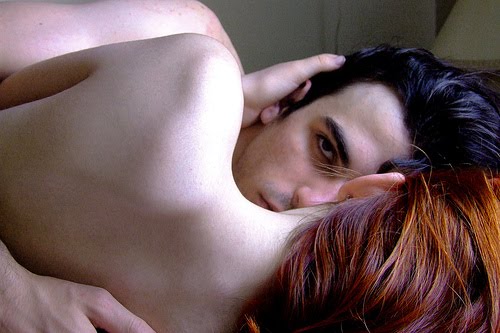 Estos son algunas causas del porque se da la infidelidad en la pareja:
-La infancia: la manera en como se vivió en la infancia, determina las formas de conducta de la familia y la persona en la edad adulta.Por lo tanto una persona que de niño fue desatendido, extremadamente sobreprotejido, inseguro, proveniente de una familia disfuncional, o en donde no hay la promoción de valores y principios, es más probable que cuando mayor sea infiel a su pareja.
– Vacío: la soledad, el aislamiento, deseperenza o una depresión sin explicación, provocan inestabilidad en los matrimonios.Cuando aparece ese sentimiento de vacío en una de las partes, la persona tiende a seguir buscando a su «pareja ideal», y aunque no sabe lo que realmente quiere, es infiel.
– Otro de los factores que provoca la infidelidad se refiere a la elección de la propia pareja.- después de un tiempo, él o ella se dan cuenta de que no son compatibles y tal vez durante un tiempo pudieron sobrellevar la situación, pero después fue imposible.
-Búsqueda de nuevas experiencias: esto ocurre sobretodo en personas que no han tenido relaciones con otras personas.
-El sentimiento de menosprecio:una vez que ha pasado la etapa de enamoramiento en la pareja, ésta se enfrenta a la realidad, olvidando a aquella persona que tanto se idealizaba, ahora sus conductas ya no son placenteras en la convivencia, por lo que se defraudan las expectativas. Por otro lado hay un abondono mutuo en la pareja, centrándose cada uno en sus objetivos personales y no en los de ambos, así que si aparece otra persona que los haga sentir más valorados, se elige inconscientemente como nueva compañera.
– La monotonía: esta es uno de los más grandes enemigos en la relación de pareja. Un matrimonio sumido en la rutina y en el aburrimiento esta más vulnerable, por lo tanto si llega alguien que ofrece un panorama distinto, lleno de encantos, novedades, riesgos y demás cosas de que carece la relación conyugal, es muy probable que se acepte.
– La vida sexual deficiente: aunque no es el único elemento en la relación de pareja, si es muy importante, por lo que si una de las partes no se siente satisfecho sexualmente tiende a buscar fuera de la relación la satisfacción sexual que no encuentra en su pareja, a pesar de amarla. El que ella o él no satisfagan al otro o no quiere llevar a cabo sus fantasías sexuales, le crea un sentimiento de enojo y venganza , llevándolo(a) a tener relaciones sexuales con otra persona.
-Interferencia de la familia(padres): otro factor que influye para que la infidelidad se de es la intervención de los padres en la vida matrimonial de sus hijos, lo cual viene de la mano con la dependencia emocional de la pareja.Ya que al no establecerles límites, provoca que halla sentimientos de abandono y poco valor hacia el otro, llevándolo a buscar una relación extramarital.
-Ya no sienten lo mismo:cuando el enamoramiento que existía en un pricipio en la pareja se ha ido acabando y se vive en el hastío de una relación, mientras que al mismo tiempo una de las partes necesita seguir satisfaciendo su necesidad de seguir enamorado, es muy común que busque vivir nuevamente ese sentimiento con otra persona.
-No perder la idealización de la pareja: otro factor causante de la infidelidad es cuando una de las partes desea que su pareja la siga idealizando y para evitar modificar esa imagén elige como amante a una persona totalmente opuesta. Con ella es con quien llevan a cabo todas sus fantasías sexuales y no con la pareja.
-Miedo a perder la libertad:cuando la pareja es asfixiante o una de la partes tiene miedo a perder su independencia y quedar atrapados en una relación, intenta sentirse libre cometiendo actos de infidelidad.
-Por lo que se tiene: en muchas ocasiones, también se llega a ser infiel, cuando uno de la pareja por haber obtenido poder, dinero y una posición social, siente que se ha ganado el derecho a tener un mayor potencial sexual con el sexo opuesto.
-Cuando la pareja lo permite porque sabe que la relación esta mal: se da sobre todo cuando ambos se dan cuenta de las deficiencias de su relación, y por lo tanto estan de acuerdo en que los dos o a veces uno tenga relaciones extramaritales con otra persona, de tal forma que con ella pueda satisfacer lo que le hace falta en su relación con su pareja estable.
Relaciones de pareja en las Sociedades Latinoamericanas. Editorial Camus. 2008. Buenos Aires, Argentina.
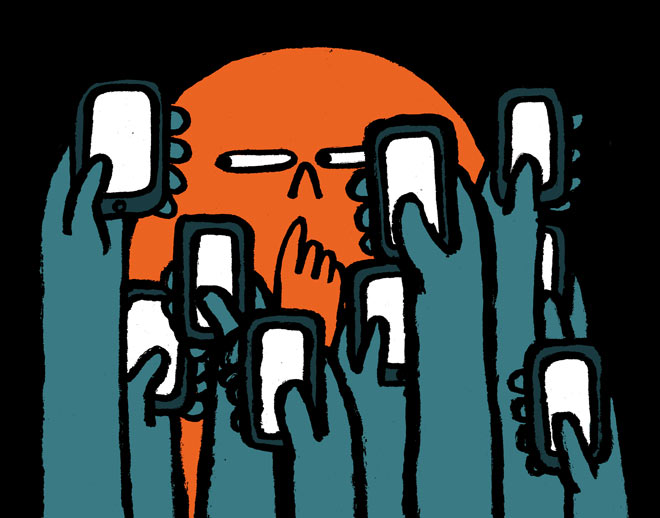
If you believe the standard theory about how new gadgets like the iPad succeed, it’s all up to the early adopters. These are the die-hard gear hounds like me who buy anything new. Early adopters are only a small slice of the market—an estimated 13.5 percent—but high tech marketers usually target them first. Get the early adopters excited, the thinking goes, and they’ll talk up the gizmo to their friends, eventually persuading the great mass of the market to buy.
In contrast, there are the people on the far end of the adoption curve: the laggards. They’re the 16 percent of the population who wait for years to pick up on a new gadget. Why bother with them? They’re going to sit on their hands, glowering at the new and refusing to buy. Marketers generally ignore them, assuming laggards are irrelevant to the early success of a high tech invention.
But this view might be precisely wrong. If you believe recent work by Jacob Goldenberg, an Israeli marketing academic, laggards might be a crucial high tech demographic.
How could this be? Goldenberg offers the following thought experiment. Imagine that John is a laggard who buys a Walkman and listens to it while he jogs every day. Eventually, the Discman comes along, but John doesn’t upgrade because he doesn’t see anything wrong with his Walkman and doesn’t want to rebuy his music on CD. Then MiniDisc players come along, but John still holds on to his Walkman. Then, 16 years after he bought his portable tape deck, MP3 players become the hot new thing.
By now, though, John is finally starting to feel self-conscious about his huge, bulky Walkman, and maybe it’s starting to break down. He’s finally ready to buy a new music player, so he becomes—ironically—one of the first people to get an iPod.
This, as Goldenberg and his colleague Shaul Oreg put it, is the “leapfrog effect.” A laggard, merely by behaving like a laggard, can wind up becoming one of the most avant-garde of early adopters.
“We realized that the definition of laggard is wrong,” Goldenberg says. “In the case of multiple generations of products, they can just skip generations. So they can also be first.”
Nice theory, but is it true? To test it, Goldenberg surveyed 105 people in 2003 to find out what sort of portable audio players they owned. Bingo: Fully 10 percent had done exactly what Goldenberg predicted—they’d jumped from a cassette player straight to an MP3 player. Another 23 percent hadn’t bought anything yet to replace their cassette player, so presumably they, too, could leapfrog, possibly even becoming the folks who buy the next new new thing.
Goldenberg argues that the economic impact of leapfrogging laggards is huge. By his calculations, if only 10 percent of laggards leapfrog, their purchases can drive profits from a new gadget 89 percent higher than they would be without leapfrogging. “And that can be the difference between succeeding and not succeeding,” he says.
If Goldenberg is right, marketers have made a colossal error by snubbing laggards. Instead, they ought to be frantically figuring out how to market to them. After all, early adopters don’t need much convincing. But if you can figure out how to tip just 1 percent of laggards into the “buy” category, the upside is huge. What’s more, Goldenberg thinks word-of-mouth recommendations from laggards are supremely persuasive: If John can handle that new gizmo, anyone can, right?
Which brings us to the iPad. Many geeks I know shrugged when Apple finally showed it off. It doesn’t do anything better than their iPhone or laptop, so they can’t figure out why anyone would want one.
Sure, but what if you’re a laggard who never bought an iPhone or even a laptop? Imagine, for example, all the older consumers who’ve never bought a home computer because they’re baffled by mouses and device drivers. (That’s probably 30 percent of older consumers, by the way.) But now their kids are taking digital pictures and videos of the grandkids, and they’d like something that lets them easily see this stuff, something with an intuitive interface that they can carry around with them. They’re ready to leapfrog to something radically new.
¿Qué hago?
Slowly over the line of love,
there are three hundred millions of stars,
named and represented by human beings,
some of them shine, some others get lost.
The game is over for those who still exist.
¿Qué pasa cuando despiertas y no sabes si es de día o de noche?
que día es, o si quiera si eso sirve para algo.
realizas las actividades normales, pero estás sólo ahi pretendiendo,
una parte de tí, la más social, hace que todo luzca normal ante los demás ojos,
cuando en realidad todo se ha detenido.
Tal vez ya ni siquiera importa.
Es como probar un pastel de queso con salsa fría de zarzamoras molidas. La consistencia espesa y helada en mi boca, la sensación del azucar, la leche y las notas frutales convierten la saliba de mi boca en una extensión líquida del maravilloso sabor que obtuve de esta suave rebanada de pastel.
Podría serguir así para siempre.
De nuevo los mismos ingredientes se conjugan en un pastel teóricamente igual al que enamoró mi vida y mi paladar, pero por más que percibo las notas, la consistencia y los sabores, esto no se parece a nada al sabor inigualable de tus frutas, tus aromas, la sed que me provocas después de cada cucharada.
y de pronto… lo sé
que eche a perder.

Si tu pregunta es si no moriré hoy, la respuesta es no.
Hablar sobre el bienestar es más complejo, siento que no quiero detenerme, hasta dormir me causa conflicto porque me obliga a pensar una vez más en el fracaso de mi vida, en la muerte de uno de los pocos universos que había creado yo mismo.
Podría hacer una tesis sobre que tan bien o que tan mal me siento, porque sentirme bien sería terminar de aceptar que he perdido, pero sentirme mal sería hipócrita, como el asesino que llora con las manos llenas de sangre a su victima.
Esto también pasará, más no el tiempo juntos… Eso, no pasará jamas.
 EDI TIMES