
Tabla de Grupos: Hexagonal CONCACAF rumbo al mundial

Smart Nutrition Get Smart
This is a blended cocktail of every vaguely credible herbal supplement, rolled into a single pill. There’s Huperzine A (an extract from Chinese moss that prevents brain deterioration), Periwinkle extract, and Pyritinol (a drug used in Europe to aid healing in severe head trauma).
Not only did Get Smart repeatedly perform better in memory tests, I noticed the effects long after the evaluation time had ended. While testing I wrote an insightful and pithy cover letter, won a debate on the function of the Vietnam War, and finally baked a perfect chocolate soufflé. I may have even cured cancer in my sleep (unfortunately I can’t find my notes on that). In the case of Get Smart, it really was matter over mind.
Vocab-Retention Score: 15/15
GRE Math Score: 25/30
WIRED Will unleash your inner Doogie Howser. Improves focus and memory, and appears to enhance creativity.
TIRED The only thing harder to swallow than the pill’s bulky mass is its high cost — nearly a dollar per capsule. Even Steve Carrell is rolling his eyes at the name.
Natural Factors Learning Factors
Strong enough for slacker millennials, but gentle enough to feed your hyperactive tot, Learning Factors combines tuna-fish–oil extract and omega-6 fatty acids to nourish your neurons and improve concentration. Just for good measure the makers also added borage oil, an anti-inflammatory shown to decrease pain in arthritis sufferers. But for me this drug led to high performance in memory-retention tests and comprehension. Not to mention, we hear fish oil does a body good.
Vocab-Retention Score: 12.5/15
GRE Math Score: 23/30
WIRED Comes in liquid, capsules and nutrient powder. Calmed my mind and improved word retention significantly within 24 hours of use. Tuna oil is pesticide-free and dolphin-friendly.
TIRED Chewable capsules taste like peach-flavored tuna fish.
Ginkgold 60 MG
Despite conflicting scientific findings, Ginkgo biloba has been one of the most popular supplements for almost two decades and, surprise, Ginkgold is chock full of it. The claim: By improving circulation you increase the blood flow to the brain, and the ginkgo extract helps you make connections, retain information and keep focused.
Be warned: Get the dose slightly wrong and it can make you more Young Einstein than Albert Einstein. After taking the recommended dose my mind was on warp speed. But I was paranoid and loopy, too. It felt like drinking three Red Bulls and trying to meditate. I adjusted the doses, and the crazy-pill effects subdued — along with the memory help.
Vocab-Retention Score: 11/15
GRE Math Score: 22/30
WIRED You can strike Ginkgold practically anywhere (it’s widely available at natural food stores and supermarkets.)
TIRED More ups and downs than an afternoon at Magic Mountain. Increased blood flow created a series of overwhelming energy bursts, affecting quantitative test scores for the worse.
Planetary Herbals Bacopa Extract
Common to the Indian Ayurveda homeopathic medicine system, Bacopa monnieri is a flowering perennial that supposedly calms nerves and improves memory. But will it dust off your cranium? Unlikely. Bacopa extract performed the lowest in our memory tests and pretty poorly in quantitative study.
A slew of scientific evaluations show it might become more effective with long-term use, but side effects made me wary of taking it any longer than necessary. Bacopa made me groggy — and downright mopey. After a day of putzing around the house avoiding GRE books, all the studying lost was not worth any cognitive pathways gained.
Vocab-Retention Score: 7/15
GRE Math Score: 19/30
WIRED Immediate calming effects might help test-day jitters. Australian studies suggest long-term bacopa use improves short-term memory drastically. But what do Australians know? They gave the world Yahoo Serious.
TIRED Bacopa made me tired of life, tired of studying, but mostly tired of taking bacopa.
What’s your favorite study supplement? How do you use it? Submit your favorites here!
Biologists have figured out the most efficient way to destroy an ecosystem — and it’s based on the Google search algorithm.
Scientists have long known that the extinction of key species in a food web can cause collapse of the entire system, but the vast number of interactions between species makes it difficult to guess which animals and plants are the most important. Now, computational biologists have adapted the Google search algorithm, called PageRank, to the problem of predicting ecological collapse, and they’ve created a startlingly accurate model.
“While several previous studies have looked at the robustness of food webs to a variety of sequences of species loss, none of them have come up with a way to identify the most devastating sequence of extinctions,” said food web biologist Jennifer Dunne of the Santa Fe Institute, who was not involved in the research. Using a modified version of PageRank, Dunne said, the researchers were able to identify which species extinctions within a food web would lead to biggest chain-reaction of species death.
“If we can find the way of removing species so that the destruction of the ecosystem is the fastest, it means we’re ranking species by their importance,” said ecologist Stefano Allesina of the University of California, Santa Barbara, who co-authored the paper published Friday in PLoS Computational Biology.
Unlike previous solutions to the coextinction problem, the Google solution takes into account not only the number of connections between species, but also their relative importance. “In PageRank, you’re an important website if important websites point to you,” Allesina said. “We took that idea and reversed it: Species are important if they support important species.”
In other words, grass is important because it’s eaten by gazelles, and gazelles are important because they’re eaten by lions.
When the researchers tested the Google algorithm against existing models for predicting ecosystem collapse, they found that the new solution outperformed the old ones in each of the 12 food webs they looked at. “In every case that we tested, the algorithm returned either the best possible solution, out of the billions of possibilities, or very close to it,” Allesina said. In this case, the “best possible solution” is the one that predicts total ecosystem collapse using the fewest number of species extinctions.
To make the circular PageRank algorithm work for food webs, which are traditionally considered unidirectional, the researchers had to solve the problem of what to do with dead ends: Not much eats a lion, but that doesn’t necessarily mean lions aren’t critical to the food chain. The scientists solved this problem by adding what Allesina calls a “root node,” which is based on the idea that all living creatures contribute to the food chain through their excrement and eventual decay.
“What we found is that the importance of a species can be connected to the amount of matter that flows to it,” Allesina said. “If species eat a lot of things, and a lot of things eat them, they tend to be important.” Previous solutions to the problem tended to underestimate the importance of species that are lower on the food chain, Allesina said, and he hopes the new solution will encourage conservation biologists to take a broader view of species extinctions.
“What I hope is that people will pick up interest and start thinking about conservation in a more network-based way,” Allesina said. “Right now, most conservationists are focused on a single species, and they just study that species. But you really have to take into account that this species is not independent, it’s really tangled in a network of multi-species interactions.”
For ecosystems on the brink of collapse, such as marine environments taxed by overfishing, Allesina said a network-based approach to conservation could make all the difference.
 Me resulta increiblemente sorprendente, como el fanatismo recalcitrante es capaz de generar seres tan distantes de los que la naturaleza genera por si misma. Hablando especificamente de la manipulación mental sobre los seres humanos, no cabe duda que bastan un montón de ideas acomodadas de cierta manera para crear una identidad completa, sin importar que sea una bastante dañina.
Este niño, que habla con vehemencia y agresividad de Dios, resulta, más que convincente y persuasivo, espelusnante. No imagino todo lo que tuvo que haber detrás para poder generar en su consciencia los sentimientos de los que habla, si es que en verdad los hay.
En todos niveles, la manipulación y el fanatismos son enemigos de la libertad y de la consciencia libre de los individuos en el mundo, Y no sólo las religiones sino cualquier cosa en la que se crea se puede volver contra la integridad de los seres humanos.
Este mensaje que pueden ver aquí abajo, es sin duda alguna muestra de como el mundo se ha convertido en un lugar dificil de comprender, o más bien un lugar dificil de convertir.
Comparto con todos mis amigos, conocidos y curiosos este texto de mi profesor de Filosofía, gran amigo y quien admiro profundamente.
Espero les guste y sin quieren leer más textos de él, sigan el link en donde está su nombre.
 En ocasiones, tal vez con demasiada frecuencia, se permanece escéptico ante el amor. Principalmente ante el intenso amor que nace desde el principio. No se ama tan rápido, se dice. ¿Ya tan pronto? se preguntan extrañados. La respuesta al enigma se relaciona con el error de pensar que quien genera ese amor intenso es exclusivamente el sujeto amado. El que ama ama, sí por que encuentra alguien, pero también y principalmente, por que ha tenido, desde siempre capacidad de amar. Ama, pues ya amaba desde antes…
Así, hoy me levanto eufórico y prendo el estereo y escucho la hermosa voz de Aretta Franklin que nos canta…
I say a little pray for you
The moment I wake up
Before I put on my makeup
I say a little pray for you
While combing my hair now,
And wondering what dress to wear now,
I say a little prayer for you
Forever, and ever, you’ll stay in my heart
and I will love you
Forever, and ever, we never will part
Oh, how I love you
Together, forever, that’s how it must be
To live without you
Would only meen heartbreak for me.
I run for the bus, dear,
While riding I think of us, dear,
I say a little prayer for you.
At work I just take time
And all through my coffee break-time,
I say a little prayer for you.
Forever, and ever, you’ll stay in my heart
and I will love you
Forever, and ever we never will part
Oh, how I’ll love you
Together, forever, that’s how it must be
To live without you
Would only mean heartbreak for me.
I say a little prayer for you
I say a little prayer for you
My darling believe me, ( beleive me)
For me there is no one but you!
Please love me too (answer his pray)
And I’m in love with you (answer his pray)
Answer my prayer now babe (answer his pray)
Forever, and ever, you’ll stay in my heart
and I will love you
Forever, and ever we never will part
Oh, how I’ll love you
Together, forever, that’s how it must be
To live without you
Would only mean heartbreak for me (oooooooooh)
Me puede mucho no estar enamorado de nadie. Pero me entusiasma saberme listo para hacerlo de nuevo…
 ¿Quién dice que no se pueden comprar amigos? Una empresa australiana de marketing online está vendiendo amigos y admiradores a los miembros de Facebook después de ofrecer un servicio similar a los usuarios de Twitter.
La empresa de publicidad, marketing y promociones uSocial (http://usocial.net) dijo que se dirige a los sitios de redes sociales debido a su enorme potencial publicitario.
«Facebook es una herramienta de marketing extremadamente efectiva», dijo en un comunicado Leon Hill, presidente ejecutivo de uSocial.
«El simple hecho es que con un seguimiento grande en Facebook, tienes un grupo objetivo instantáneo de personas con el que te puedes contactar y promocionar lo que sea que quieres promocionar», agregó.
«El único problema es que puede ser extremadamente difícil conseguir este seguimiento, y aquí es donde entramos», sostuvo.
La compañía ofrece paquetes para Facebook, la primera red social en internet del mundo, que comienza en 1.000 amigos y llega hasta 10.000, a un precio de entre 177 y 1.167 dólares.
«Todo lo que hacemos es enviarles un mensaje de bienvenida o una solicitud de amistad del cliente. Si deciden seguir adelante y agregar a esa persona como amigo o como admirador lo harán, si no, entonces no», dijo Hill a los medios australianos.
Facebook es ahora el cuarto sitio web más visitado en el mundo.
Sin embargo, los paquetes de uSocial no están exentos de controversia.
Según sitios australianos, Twitter trató de bloquear a uSocial acusándolo de enviar correo basura a sus miembros, mientras que el diario estadounidense Los Angeles Times informó que Digg.com, una página donde la gente vota por sus noticias o sitios favoritos, también intentó bloquearlo por vender votos.
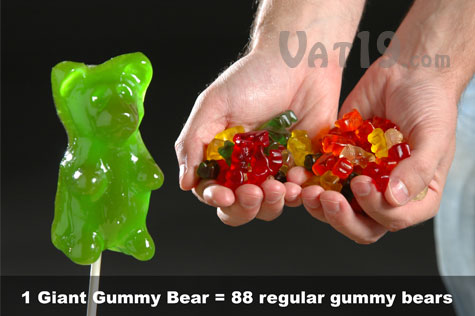 Esto comprueba como los seres humanos tenemos la capacidad de idear, practicamente cualquier estupidez y no sólo eso, llevarla a la práctica.
Además se ve buenisimo.
 Cuauhtémoc Blanco habla de la convocatoria de Nery Castillo y de Guillermos Franco.
Al mismo tiempo que confronta a los medios de comunicación y les pide que se queden al margen de las decisiones de Javier Aguirre.

 EDI TIMES