So close… so far away.
Everything so clear, so funny.
So fake…
Faith on who?
I wish when my wings grow up enough
We can both fly away
So close… so far away.
Everything so clear, so funny.
So fake…
Faith on who?
I wish when my wings grow up enough
We can both fly away
Length: abc ABC 123 !@#

Lessons borne of trial and error and error
 Pick out a hardcover book.
 Make sure it’s structurally sound and kind of pretty, but wouldn’t stick out too much on a bookshelf. Bonus points for a nice book jacket too, but more on that later.
 Gather materials: Ruler, X-Acto knife, 3 or 4 fresh blades, pencil, tape, scrap paper, plastic wrap.
 Wait, there’s more! Glue, a little cup for glue, and an old paintbrush.
 Take a minute and appreciate the book you’re about to totally destroy. Go on, feel a little guilty. Remind yourself that true art is ephemeral and move on.
 Open up the book and find the prettiest page. Not this one …
 Meh …
Meh … Plants are so weird …
 Nah …
Nah … It’s perfect!
 Use the X-Acto knife to carefully cut the page out of the book as close to the spine as you can. Don’t use too much pressure if it’s a fresh blade; you only need to extract The One.
 Set it aside, out of harm’s way. While you’re at it, take off the cover if it has one and set that aside, too. You won’t need them anytime soon.
 You will, however, need that plastic wrap soon, so whip it out.
 Tape, too!
 Flip to the back cover. Get a nice big piece of plastic wrap and line it up with the inside of the spine.
 Close the book so you’re looking at the back cover.
 Wrap the plastic around the cover and tape it in place because you’re a cautious person.
 A really cautious person.
 Now open up the front of the book and flip through the first few pages. Choose your favorite left-side page. (There was nothing too great in this one, so I just chose the table of contents.) Now – this is important! – turn exactly one more page. You should not be able to see your chosen page anymore!
 Wrap these pages up with the cover the same way as before.
 Make sure the plastic on both sides is as close to the spine as you can get it.
 Squeeze some glue into your glue cup.
 Now add a little water to the glue. I find that 80% glue, 20% water works best. If you make it too thick, the glue will be harder to spread and more noticeable on the edge of the pages. If you make it too watery, it will be weaker, warp the pages and take forever to dry. It’s a delicate balance.
 Mix it up with your paintbrush.
 Start applying your glue mixture to the page edges, working your way out from the spine. Don’t be afraid to use a lot of glue; it will dry more or less invisibly.
 … not that it’s particularly visible at this stage, either. No matter.
 Gather up your roommate’s MCAT review and cookbooks (unless you are that weird roommate who likes cooking and going to med school, in which case, use your own, freak). Plop ‘em on top of your book. If necessary, enlist the help of your heavy fish bowl.
 Hi, Maurice!
 Make yourself a nice hot beverage while you wait for your book to dry.
 Go ahead and dick around with your camera while you wait, too.
 Oh my god, is this thing seriously still drying? It’s been like 20 minutes.
 Uggghhh. Can I start slicing yet?
 It’s dry! Test for structural integrity. If the pages aren’t pretty well bound together at the edges, apply another coat of glue and wait for it to dry again.
 Open to the first page that’s not wrapped in plastic.
 Use your ruler to measure and mark a half inch border around this page.
 Don’t worry if you go overboard with the pencil; it will be covered later.
 Line your ruler up carefully with one of the corners. Use your X-Acto knife to trace the line, as neatly as you can, around the whole page. Tip: You can speed up the cutting later, but now is the time to cut with extreme patience and care!
 Remove however many pages your slicing has now freed. In general, don’t force pages out; make sure you’ve cut all the way through, especially at the corners.
 This pile is about to get a lot bigger.
 Continue slicing and removing pages. At this point you shouldn’t need the ruler anymore.
 Whenever it starts getting harder to cut, feel free to swap out your X-Acto blade. I usually go through at least three per book. If you try to make them last, the cutting process will take a lot longer, and you’re not allowed to sue me if you develop chronic wrist pain.
 Keeping your corners clean is the hardest part, but once you get sloppy it only becomes harder, so it’s worth it.
 You have an audio book, right? At least some podcasts, I hope. I recommend This American Life and The Moth if you’re into that kind of thing.
 Check how far you are from the back so you know when you’re close to finishing.
 You made it!
 You weren’t as attentive as you thought and sliced right through to the back cover. Way to go, champ.
 Say your goodbyes.
 You probably want to rewrap the back cover at this point since you carelessly sliced through the plastic.
 Apply an unholy amount of glue to the inside of the book, and to the ½» border of the first page. Really, go nuts! If it doesn’t look like a six year old was responsible when you’re done, you screwed up.
 Carefully pull one page out of the plastic wrapped pages and press it down on top of the glue-covered border. Smooth it out as well as you can, starting at the spine.
 Close the book again …
 … and reacquaint it with Maurice, MCAT reviews, and The Joy of Cooking. Let it dry for a few hours; since the inside is completely enclosed, it will take a little longer than the edges did.
 Open it up when you’re pretty sure it’s dry.
 Carefully slice the first page open (bonus points for autopsy-style), starting at the corners.
 Now carefully cut the page along the edges.
 This part is really satisfying.
 Tadaaa!
 Admire your handiwork some more.
 Hollowed book pr0n
 Okay, enough of that. Remember how you haphazardly sliced up the back cover? Here’s where we fix it.
 Go get that page you set aside at the beginning.
 Line it up so it looks nice when the pages are laid against the back cover.
 Mark where you want to cut the page so that it doesn’t hang over the edges …
 … and slice as needed to make it fit where you want it.
 Ah, much better.
 Okay, now set your pretty, cut-to-fit page aside once more and get out the book jacket, if you have one. (If not, just scroll past all this book jacket stuff.)
 Wrap the book jacket around the back cover, under the pages, so that it would look natural if the book were closed.
 This is how you’ll be gluing it.
 Now, apply glue to the back of the interior-facing book jacket fold and press it against the back cover. Close the pages to help it dry flat.
 If the edge is sticking up, place your ruler over it to hold it down while it dries.
 It shouldn’t take long.
 Once it’s dry, glue the loose page on top of it.
 Use the ruler to get rid of that pesky bump, then simply glue the pages to the back cover.
 The book jacket should be able to move freely; there’s no need to glue more than that one strip on the back.
 You’re done! Give it to someone who has a lot to hide, perhaps with a heartfelt card to that effect.
 Finished product
 Finished product
 Finished product
 Finished product
 Finished product
 You can make a hollowed-book bank for coins without too many adjustments to the process above:
Oh Dios de los hombres del monitor,
cubre sus enormes ojos para que no escuchen,
el canto libertario de los hombres conscientes.
Deja afònicos a los que claman armonia universal,
Elimina a los que guardan esperanzas en sus fuerzas humanas,
Ahorca el espiritú de los oprimidos que creen en el mañana.
Te rezo con el mismo fervor que los cristianos,
la diferencia es que estoy convencido que tu no existes,
y aunque sacrificará mi vida en mi llamado.
No podrá jamás nada, arrancar la perfección natural,
aunque los hombres se desvanezcan.
 Parafraseando palabras inteligentes:
Aprendiste sólo en base a los errores.
Yo sólo me encargue de hacertelo saber.
Por eso es importante aprender de las caidas.
Ahora trata de mantenerte de pié un tiempo,
que siempre se vuelve uno a caer.
Y aprendes otra vez.
El que no se cae, no existe
aprende menos, el que menos se cae.
Caerse también es sinónimo de estar en movimiento.


“I remember when I used to think the year 2000 was the future. What an IDIOT I was.” – Jonathan Coulton (Jan 4, 2010 via Twitter)
As a free society we’ve always had a Utopian view of the future. This view has been reflected in movies, in literature and with cutting edge technology. From the realization of an actual hand held tablet similar to the one Picard held as he strolled around the Enterprise, to the imagined designs of futuristic electric cars – the future has always been one step ahead of the present. I guess that’s why it’s called the future. Growing up in the 1980’s and 1990’s, the 2000’s were always “the future.” Well, now the 2000’s are gone. So where are my flying cars? Where is my floating skateboard?
These ideals and visions of the future were ingrained into our brains as children, little did we realize that it was strictly fiction. However, the bright point is that all “future” technologies are based on a vision, in effect – fiction. The Dick Tracy comic strip envisioned video phone watches in the 1930’s. Electric cars have always been a stable of science fiction novels. Even the movie “Demolition Man” wasn’t far off in it’s envisioning of future mergers of companies and PC behavior. So in another way of looking at it, the future is here. We’re living in it. Sure it’s not exactly as we imagined it to be, but it’s getting there. I always warn though, if we’re not careful we’ll all be wandering around a complex in jumpsuits, cautiously checking the crystal in our palm as we wait for Carousel.
I have an issue of Popular Mechanics from February 1950. I’m sure you’ve heard of this issue. This is the one where they wonder what kinds of innovations will take place by the year 2000. There are some very interesting ideas in the article, some of which have come to fruition, and some of which are just plain stupid. First off, the picture on the front of the article shows the fictional town of Tottenville. The has a center, then the roads and the town radiate out from it. It’s one big circle. While perhaps fictional in 1950, one would only have to look at the Florida town of Rotonda from space to see the reality of it.
Next up were some great and really bad ideas. The best is still something that hasn’t been fully realized. The article hypothesized that we’d drop our dependence on nuclear power and switch completely to solar power. In this sense, it’s not the future yet as we’ve yet to convince our politicians that the solar power lobby will have as many bags of cash as the nuclear & coal lobbies if we just get them going. The article suggests homes and office buildings being built on the cheap out of prefabricated metals and clay sheeting. While the price tag of $5000 for a home is still a dream, many office buildings are put up using prefabricated framework.
Switching to the home, it’s suggested that in the year 2000 men would be using a chemical solution to shave with. I don’t know any men that use Nair, but clearly it exists. What does the future hold for shaving? I’m guessing something with lasers. Oh wait, that exists too. We are clearly in the future of shaving. How about electric stoves that heat food in a fraction of the time it takes ovens? We have the microwave. What’s the next step? We only have to turn to Star Trek for the answer to that. Or Cloudy With a Chance of Meatballs. Food replication is the future. We’re not quite there yet. The magazine kind of suggests that with eating food that was made from sawdust. I’m not much of a physics honk, so I can’t really wrap my brain around how that might be possible. How about dishes that dissolve under hot water? Yeah, we have so-called “disposable” plates but those are thrown in the trash and really wasteful. Quit being lazy. Wash your dishes.
If you want to check out the February 1950 Issue of Popular Mechanics, this blog has a nice layout of the pages. And before you comment, I am aware Popular Mechanics revisited the subject in 2000 with another set of things we’ll see in the next 50 years. But since it’s only been ten since that was published, I decided not to feature it.
The point is, we’ll always be dreaming about the future and what it has to offer. Advances in technology and the daily advancement of micro-technology will ensure we’re all still dreaming of the future. While we take science fiction for granted these days (I don’t, I believe everything I read in sci-fi novels is possible) we can’t discount their influence on future generations of inventors and creators. While we might not have cars to fly around in, we do have electric ones. While we don’t have food replicators yet, we do have devices that we can hold in our hands and be connected to the world. There is a lot of the future that is here already, but we’ll always be in the present. So here’s to looking to the future, because by my observation, it’s not here yet.
«.»: ¿Qué vamos a hacer contigo?
«..»: Esa no es la pregunta, la pregunta es: ¿Qué harian sin mi?
«.»: Esa no es una pregunta, se acabaría la existencia del universo, pero eso es una certeza.
Blanco: Los momentos juntos.
Negro: un niño de la calle.
Azul: un momento romántico en el frío de la madrugada.
Verde: los ojos ilusionados.
Rojo: más el miedo que la decisión.
Blanco: Las platicas en la casa de mis padres.
Negro: La parada de camiones de Playa del Carmen a las 7:00 pm
Gris: Los momentos nublados en la cama.
Azul: Besos borrachos apasionados.
Rojo: Unos labios afilados y brillantes.
Verde: un camino largo pintando en oleo que no existe, pero lo imagino.
Negro: una muerte opaca que no me provoca llorar.
Blanco: los niños corriendo en circulos sonriendo.
Azul: el miedo no tener entre mis brazos a mi alma gemela.
Negro: Blanco.
Blanco: Azul.
Rojo: Verde.
Gris: Rojo.
Amarillo: Negro.
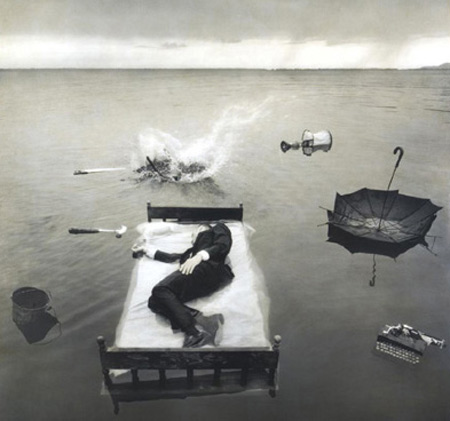
Deslizantes sombras de menta caminan asechando,
entre sonidos de acordes incompletos y notas muertas,
una mesa cubierta de deseos llenos de polvo,
un jarrón olvidado en la mesa del jardín,
y a la distancia una voz.
Enredados los cabellos amanecen entrelazados,
dos cuerpos que se miran de espaldas,
las sabanas no ocultan los sentimientos desnudos,
la libreta de apuntes desdoblada en la mesa del tocador,
y en el silencio un anhelo.
Atiborrados de seres humanos los caminos enmaquinados,
los gélidos vientos infernales invernales pintan los cielos de gris,
de nuevo el monitor se viste de letras y signos irrelevantes.
y en mi mente un sueño.
 EDI TIMES