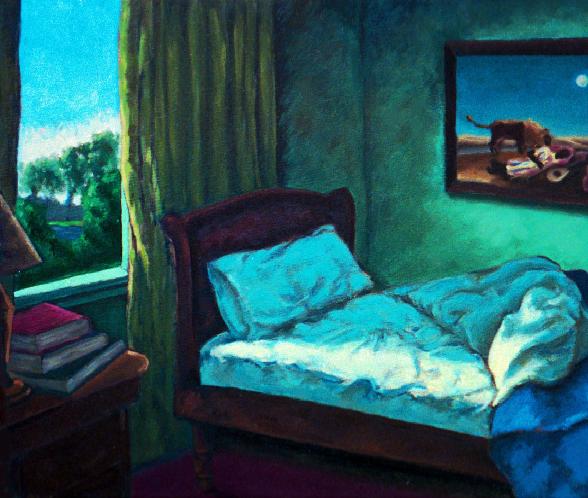
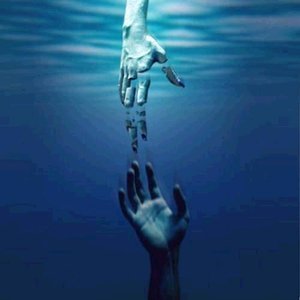
Extráñala

 Extráñala,
 es una niña linda,
 y acaba de partir.

 Sólo eso
 extráñala
 abraza una almohada y extráñala hasta q no puedas más

 Forzate a extrañarla,
 añórala,
 imagínala entre tus brazos y llora si te es posible.

 Cierra los ojos y siente como te besa,
 acuerdate cuando con la mirada te dijo: «te amare por siempre»

 Recuerda su cabello mojado,
 su cara de enojo, su ternura,
 como te miraba y tomaba tus manos.

 Eso que sientes al recordar,
 es el mismo amor que viviste esa vez,
 y cada que te obligues a extrañar,
 lo viviras una y otra vez.

Clive Thompson on the Death of the Phone Call

Great comment and analysis of what is happening and what will happen with phone calls. Check it out, find out more at: Wired.com

(By: Clive Thompson) 

My phone bills are shrinking. Not, unfortunately, in cost. I mean they’re getting shorter. I recently found an old bill from a decade ago; it was fully 15 pages long, because back then I was making a ton of calls—about 20 long-distance ones a day. Today my bills are a meager two or three pages, at most.
Odds are this has happened to you, too. According to Nielsen, the average number of mobile phone calls we make is dropping every year, after hitting a peak in 2007. And our calls are getting shorter: In 2005 they averaged three minutes in length; now they’re almost half that.

We’re moving, in other words, toward a fascinating cultural transition: the death of the telephone call. This shift is particularly stark among the young. Some college students I know go days without talking into their smartphones at all. I was recently hanging out with a twentysomething entrepreneur who fumbled around for 30 seconds trying to find the option that actually let him dial someone.

This generation doesn’t make phone calls, because everyone is in constant, lightweight contact in so many other ways: texting, chatting, and social-network messaging. And we don’t just have more options than we used to. We have better ones: These new forms of communication have exposed the fact that the voice call is badly designed. It deserves to die.

Consider: If I suddenly decide I want to dial you up, I have no way of knowing whether you’re busy, and you have no idea why I’m calling. We have to open Schrödinger’s box every time, having a conversation to figure out whether it’s OK to have a conversation. Plus, voice calls are emotionally high-bandwidth, which is why it’s so weirdly exhausting to be interrupted by one. (We apparently find voicemail even more excruciating: Studies show that more than a fifth of all voice messages are never listened to.)

The telephone, in other words, doesn’t provide any information about status, so we are constantly interrupting one another. The other tools at our disposal are more polite. Instant messaging lets us detect whether our friends are busy without our bugging them, and texting lets us ping one another asynchronously. (Plus, we can spend more time thinking about what we want to say.) For all the hue and cry about becoming an “always on” society, we’re actually moving away from the demand that everyone be available immediately.
In fact, the newfangled media that’s currently supplanting the phone call might be the only thing that helps preserve it. Most people I know coordinate important calls in advance using email, text messaging, or chat (r u busy?). An unscheduled call that rings on my phone fails the conversational Turing test: It’s almost certainly junk, so I ignore it. (Unless it’s you, Mom!)

Indeed, I predict that as this sort of hybrid coordination evolves, it will produce a steep power law in the way we use voice calls. We’ll still make fewer, as most of our former phone time will migrate to other media. But the calls we do make will be longer, reserved for the sort of deep discussion that the medium does best.
Our handsets could also use a serious redesign. If they showed our status—are you free to talk?—it would vastly streamline the act of calling. And as video-chatting becomes more common, enabled by the new iPhone and other devices, we might see the growth of persistent telepresence, leaving video-chat open all day so we can speak to a spouse or colleague spontaneously. (Some Skype users already do this.)
Or, to put it another way, we’ll call less but talk more.

Email clive@clivethompson.net.

Differences between Men and Women

(By:Wakooz) 


NICKNAMES: If Gloria, Suzanne, Debra and Michelle go out for lunch, they will call each other Gloria, Suzanne, Debra and Michelle. But if Mike, Phil, Rob and Jack go out for a brewsky, they will affectionately refer to each other as Fat Boy, Godzilla, Peanut-Head and Useless.

EATING OUT: And when the check comes, Mike, Phil, Rob and Jack will each throw in $20 bills, even though it’s only for $22.50. None of them will have anything smaller, and none will actually admit they want change back. When the girls get their check, out come the pocket calculators.

BATHROOMS: A man has six items in his bathroom-a toothbrush, shaving cream, razor, a bar of Dial soap, and a towel from the Holiday Inn. The average number of items in the typical woman’s bathroom is 437. A man would not be able to identify most of these items.

GROCERIES: A woman makes a list of things she needs and then goes out to the store and buys these things. A man waits till the only items left in his fridge are half a lime and a soda. Then he goes grocery shopping. He buys everything that looks good. By the time a man reaches the checkout counter, his cart is packed tighter than the Clampett’s car on Beverly Hillbillies. Of course, this will not stop him from going to the 10-items-or-less lane.

SHOES: When preparing for work, a woman will put on a Mondi wool suit, then slip on Reebok sneakers. She will carry her dress shoes in a plastic bag from Saks. When a woman gets to work, she will put on her dress shoes. Five minutes later, she will kick them off because her feet are under the desk. A man will wear the same pair of shoes all day.
CATS: Women love cats. Men say they love cats, but when women aren’t looking, men kick cats.

DRESSING UP: A woman will dress up to: go shopping, water the plants, empty the garbage, answer the phone, read a book, get the mail. A man will dress up for: weddings, funerals.

LAUNDRY: Women do laundry every couple of days. A man will wear every article of clothing he owns, including his surgical pants that were hip about eight years ago, before he will do his laundry. When he is finally out of clothes, he will wear a dirty sweatshirt inside out, rent a U-Haul and take his mountain of clothes to the Laundromat. Men always expect to meet beautiful women at the Laundromat. This is a myth perpetuated by re-runs of old episodes of “Love, American Style.”

OFFSPRING: Ah, children. A woman knows all about her children. She knows about dentist appointments and soccer games and romances and best friends and favorite foods and secret fears and hopes and dreams. A man is vaguely aware of some short people living in the house.
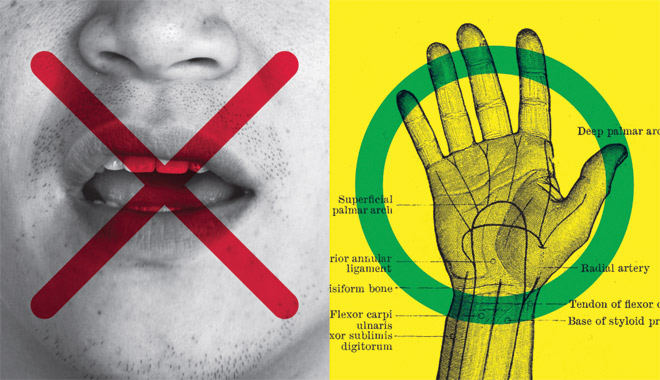

Cuando despiertes

Primero abre los ojos,
respira y sonríe,
te cubre una sabana de cariño,
las almohadas están pensando en tí.

Que no te detenga el frío,
abraza tus brazos como si fueran los mios,
mira bien a tú alrededor,
el mundo es tuyo.

Cuando despiertes disfruta,
que la vida te está esperando,
cuantos momentos maravillosos,
y caminos por recorrer.

Cierra los ojos,
ya despierta sueña otra vez,
cuando los abras,
ahi te estaré esperando.

Entregado – Carlo Filio/ Edgar Estrada

Hola a todos:

Esta canción la escribimos entre Carlo Filio y Yo, con arreglos de Carlo, a ver que les parece.

Eddie

Entregado

Tal vez un no se,
tal vez un te quiero
tal vez un momento
junto a ti

no sé lo que fue
no sé que pasó
no sé a que viniste
tu ser me fraguó

Compartiste tu ser
lloraste tus miedos
y yo sigo aquí
pensando en lo nuestro.

Temblando y sin miedo

Mañana no se que será de ti
el tiempo se pierde se estanca sin ti
y sigo entregado estoy a tus pies.

Tal vez un después
tal vez es no está bien
tal vez es un crimen
besarte así

No sé que sentir
no sé que es vivir
no sé si regresar
a deshacerme por ti.

Temblando y sin miedo.

Mañana no sé que será de ti
el tiempo se pierde se estanca sin ti
y sigo entregado estoy a tus pies.

Mañana es un después
el mañana es un hubiera
y ello no existe,
solo tengo hoy para decirte
que sigo entregado estoy a tus pies,
temblando y sin miedo,
sigo entregado estoy a tus pies

Rápido

Profundo se siente la incertidumbre,
callada se sienta a ver la indiferencia,
Siento que el cuerpo se asienta,
como agua de mar.

Los recuerdos llorando quisieran cantar,
llorando en silencio agoniza,
el silencio agoniza queriendo llorar.

Un suspiro en la soledad se pierde,
mi corazón no entiende la soledad,
el corazón se pierde y no entiende,
que suspira en la soledad.