Study: Rumors of Written-Word Death Greatly Exaggerated

Americans' print consumption has declined since 1960 but words delivered by computer have more than made up the difference.

Americans’ print consumption has declined since 1960, but words delivered by computer have more than made up the difference. (Image courtesy of the University of San Diego’s Global Information Industry Center)

Conventional wisdom holds that YouTube, videogames, cable TV and iPods have turned us away from the written word. Glowing streams of visual delights replaced paper and longhand letters shrank to bite-sized Facebook status updates, the theory held. Conventional wisdom, in this case, is wrong.
A large-scale study by the University of San Diego and other research universities revealed what some of us have long suspected: We’re reading far more words than we used to as we adopt new technologies.
“Reading, which was in decline due to the growth of television, tripled from 1980 to 2008, because it is the overwhelmingly preferred way to receive words on the Internet,” found a University of San Diego study (.pdf) published this month by Roger E. Bohn and James E. Short of the University of San Diego.
Americans consumed 3.6 billion terabytes of information last year, averaging 11.8 hours of information consumption per day. Video and videogames constituted 55 percent of those bytes, but on average, Americans read 36 percent of the 100,500 words they consume each day, according to the San Diego study, which analyzed more than 20 data sources. The study doesn’t cover writing, but a simple glance at Facebook feeds reveals that we’re almost certainly writing more than we used to, as well.
Admittedly, posting “OMG best pizza ever C U l8r” to a mix of strangers, friends and acquaintances is not the same as carrying on a lengthy epistolary relationship.
“The Internet is about the death of the written word as a means of exchange and a store of value,” writes Sam Vaknin, Ph.D., in a typical criticism. “As a method of conveying information, written words are inefficient and ambiguous…. Sounds and images are far superior … thus, textual minimalism is replacing books and periodicals.”
However, that “textual minimalism” sure adds up fast — especially considering that a decent percentage of status updates include links to longer blog posts and articles. No matter how you slice it, this San Diego study found text to be a bigger part of our lives than it was 30 years ago, when much of the internet was a mere gleam in Al Gore’s eye.
In addition, longer formats continue to be popular, despite increases in textual minimalism, competing sources of information and the general shrinkage of print magazines and newspapers — see Ars Technica’s 23-page review of Mac OS X 10.6 (1,447 Diggs, 142 on Reddit), or Glenn Greenwald’s lengthy opinion pieces (430 comments), neither of which would likely have been published by a print publication.
Meanwhile, Amazon, which seems to sell everything under the sun — including videogames, cameras and television sets — announced on Saturday that the Amazon Kindle, an eBook reader, became “the most gifted item ever in [Amazon] history” during this year’s holiday season.
The most gifted item during next year’s holiday season could well be Apple’s “iSlate” tablet, assuming rumors of its impending 2010 release are true. Say what you will about the literacy level of tweets or texts, but the position that literacy is on the decline is untenable when the most-hyped device of next year is said to be designed with free and paid-for electronic text — especially magazines — in mind.
If you’re reading thousands of words a day on a variety of devices, paper included, you need as much help as you can get in deciding which words to read. Ironically, the same technologies derided by some for contributing to a lack of literacy — Facebook and Twitter — are full of recommendations of things to read.
Technology may have truncated and warped the written word in some cases, while increasing competition for our time. But as borne out by this new data, technology hasn’t found a substitute for the written word as a means of conveying certain types of information. And, in fact, it has made reading and writing even more essential parts of everyday life.

Download Your Own Robot Scientist

 (by:Wired.com)


lipson2
Ever wanted to have a robot to do your research for you? If you are a scientist, you have almost certainly had this dream. Now it’s a real option: Eureqa, a program that distills scientific laws from raw data, is freely available to researchers.
The program was unveiled in April, when it used readouts of a double-pendulum to infer Newton’s second law of motion and the law of conservation of momentum. It could be an invaluable tool for revealing other, more complicated laws that have eluded humans. And scientists have been clamoring to get their hands on it.
“We tend to think of science as finding equations, like E=MC2, that are simple and elegant. But maybe some theories are complicated, and we can only find the simple ones,” said Hod Lipson of Cornell University’s Computational Synthesis Lab. “Those are unreachable right now. But the algorithms we’ve developed could let us reach them.”
Eureqa is descended from Lipson’s work on self-contemplating robots that figure out how to repair themselves. The same algorithms that guide the robots’ solution-finding computations have been customized for analyzing any type of data.
The program starts by searching within a dataset for numbers that seem connected to each other, then proposing a series of simple equations to describe the links. Those initial equations invariably fail, but some are slightly less wrong than others. The best are selected, tweaked, and again tested against the data. Eureqa repeats the cycle over and over, until it finds equations that work.

What took Newton years to calculate, Eureqa returned in a few hours on a decent desktop computer. Lipson and other researchers hope Eureqa can perform the same wizardry with data that now defies scientists, especially those working at the frontiers of biology, where genomes, proteins and cell signals have proven fantastically difficult to analyze. Their interactions appear to follow rules that traditional analytical methods can’t easily reveal.
“There’s a famous quote by Emerson Pugh: ‘If the human brain were so simple that we could understand it, we would be so simple that we couldn’t.’ I think that applies to all of biology,” said John Wikswo, a Vanderbilt University biophysicist who’s using the Eureqa engine in his own lab. “Biology is complicated beyond belief, too complicated for people to comprehend the solutions to its complexity. And the solution to this problem is the Eureqa project.”
lipson-robots-eureqa2
Lipson made Eureqa available for download early in November, after being overwhelmed by requests from scientists who wanted him to analyze their data. In the meantime, he and Michael Schmidt, a Cornell University computational biologist responsible for much of Eureqa’s programming, continue to develop it.
An ongoing challenge is the tendency of Eureqa to return equations that fit data, but refer to variables that are not yet understood. Lipson likened this to what would happen if time-traveling scientists presented the laws of energy conservation to medieval mathematicians.
“Algebra was known. You could plug in the variable, and it would work. But the concept of energy wasn’t there. They didn’t have the vocabulary to understand it,” he said. “We’ve seen this in the lab. Eureqa finds a new relationship. It’s predictive, it’s elegant, it has to be true. But we have no idea what it means.”
Lipson and Schmidt are now devising “algorithms to explain what our algorithm is finding,” perhaps by relating unknown concepts to simpler, more familiar terms. “How do you explain something complicated to a child? That’s what it involves,” said Lipson. “It’s machine teaching, rather than machine learning.”
One set of incomprehensibly meaningful discoveries comes from Eureqa’s analysis of cellular readouts gathered by Gurol Suel, a University of Texas Southwestern molecular microbiologist who studies how cells divide and grow. But even if Eureqa can’t yet explain what it found, it’s still useful, said Suel.
“You can use this as a starting point for further investigations. It lets you think about new ideas of what’s going on in the cell, and generate new hypotheses about the properties of biological systems,” said Suel.
Sometimes Eureqa will require more data than it’s given before finding answers. In those cases, the program may be able to identify information gaps, and recommend experiments to fill them.
That functionality is included in the latest build of the program, and is being taken even further in a new Lipson-Wikswo project. They’re hooking a version of Eureqa directly to Wikswo’s experimental gadgetry.
“The program is going to adjust the valves, feeding different nutrients and toxins to the cells,” and it does this faster than any researcher, said Wikswo. “It comes up with the equations, plus the experiments needed to come up with the equations. It’s Eureqa on steroids.”
According to Wikswo, who studies the effects of cocaine on white blood cells, Eureqa can propose experiments that researchers would have difficulty imagining.
“In most of science, you try to keep everything constant except for one variable. You turn one knob at a time, and see how the system responds. That’s wonderful for linear systems,” he said. “But most biology is complex and non-linear. Emergent behaviors are very hard to understand unless you turn many knobs at a time, and we can’t figure out which knobs to turn. So we’re going to let Eureqa pick them.”
The Cornell team hasn’t counted downloads of their program, but it’s likely being used by researchers outside biology. As long as data fits on a spreadsheet, Eureqa can analyze it.
“In the past year, people have contacted us with some wild application ideas,” said Schmidt. “Everything from predicting the stock market to modeling the herding of cows.”
Images: 1) Hod Lipson running Eureqa in his office. 2) Diagrams of information flow through one of Lipson’s self-repairing robots (left) and Eureqa (right).

Facebook: The Guardian To Integrate Facebook Connect & More

Facebook Connect

(By: The Next Web.com)

Facebook announced this morning at a briefing in which they covered  off recent site and user stats in London, that The Guardian newspaper will be integrating Facebook’s Connect across their site in the near future.

It’s a feature that has has to an extent been left to the blogging community and various web based companies such as Digg but now looks to be adopted by more mainstream media services and companies.
Globally Facebook has recorded 25,000 implementations of Connect which on the face of is a minimal amount considering they also announced Facebook now has 350 million users worldwide.
With the UK now having 23 million of those, there is a substantial audience which would be able to conveniently login to services such as the one the Guardian will be introducing.
Users data being seems to be compromised on a common occurrence of late and websites being able to pull a users data from a central location such as Facebook would surely increase security.
The Guardian Jobs third party databases were hacked back in October and it would be great to see the newspaper using this as an opportunity to use Facebook Connect for this and other services instead of just commenting.
Facebook also went through various other statistics and targets including CEO Mark Zuckerberg wanting to reach 1 billion users.

  • The average Facebook user spends 25 minutes a day on the site.
  • Facebook now has 90,000 apps
  • X-Factor Facebook Fan Page pulled in 875,000 fans in 4 weeks.
  • SkySports recorded 400,000 fans in the same period.
  • 10 million users a day become a fan of a page.

The colossal amount of usage the fan pages are seeing is being met with equal investment in the development of them by brands such as the ones feature here.  The ability to communicate so closely with users exposed and using the brand is unparalleled by any other service at current.

Engineer Weight Loss

(By: Wired.com)

Do the math

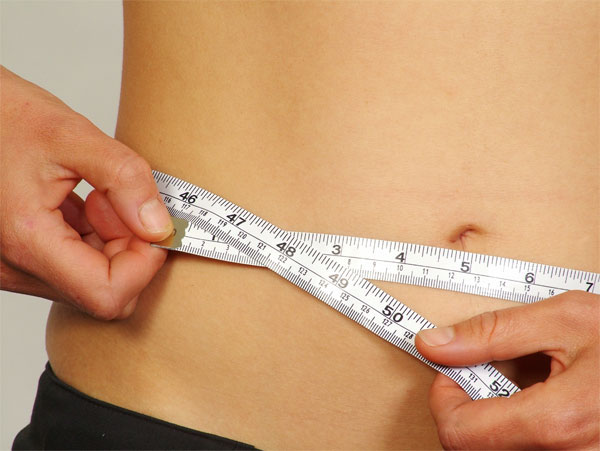
Want to drop 10 pounds in two months? All you have to do is the math, says Autodesk founder and Hacker’s Diet author John Walker. Here’s the skinny:

  1. Multiply the pounds you want to lose by the number of calories in a pound of fat: 10 x 3,500 = 35,000.
  2. Divide the total by the days you’ll diet: 35,000 ÷ 60 = 583.
  3. Calculate your Basal Metabolic Rate 100 calories per ten pounds of body weight
  4. Calculate your calories expenditure from exercize
  5. Then use the formula (BMR+Exercise)-diet=total allowed calories

Recalibrate your sensors

Try this: One night, eat only half the amount of food on your plate. Wait 30 minutes, assess your feelings of satiation, and then wait 90. If you’re still not hungry, you’ve probably been overeating. Most people grossly overestimate the amount of food they need to feel full, says Dr. David Kessler, author of The End of Overeating. A sensible meal will keep you full for four hours, and a sensible snack, for two. Experiment with reducing your portion sizes, and serve yourself those meals on smaller plates or bowls.

Identify your danger zones

Then avoid them. Overeating is a compulsion like any other. It would be a bad idea for a shopping addict to go near a mall on Black Friday, or for a chronic gambler to book plane tickets to Vegas. Likewise, are you always pulling into the drive-through on your way home from work? Try taking a different route. Replace your clear glass cookie jars with fruit bowls. This goes for friends, as well. If you find yourself commiserating about dieting difficulties over your third beer, suggest meeting for coffee instead. Or a walk.

Don’t deprive yourself

Think of long-term weight loss as a long, pleasant stroll, instead of a sprint to the finish line. Concentrate on accruing good habits slowly and painlessly. If you can eliminate 100 calories per day, that can add up to about 11 pounds a year, says Dr. Brian Wansink, author of Mindless Eating. 100 calories – that’s less than the calories in a can of Coke! Substitute one glass of water for one can of soda a day, and you’re well on your way to permanent weight loss.

Use peer pressure

Let your significant other know your intend to lose weight – they will help by suggesting that you skip dessert and by keeping the cookies out of the house. If you are really a exhibitionist you can now automatically Tweet your weight and your goal every time you step on a scale with WiThings scale

Exercise

A little exercise regularly can go a long way into helping you shed some pounds. At least 10 minutes of exercise a day can do you a world of good. If your workplace is close by, walk or use a bicycle to get to work. If it’s too far, a combination of public transportation and walking could get you there; and in the process, you’ll also earn points for being concerned about the environment!

México, segundo proveedor para trata en EU

(By: El Universal.com.mx)

La trata de mujeres y menores de edad es un lucrativo negocio de más de 32 mil millones de dólares anuales en el mundo, dijo la investigadora argentina, Viviana Della Siega. Sin embargo, señaló que esto se verá acotado cuando en los hogares y la escuela se enseñe a los menores a no ser usuarios de esta ilícita actividad.
Agregó que la actuación más pronta y expedita de justicia para atender esta problemática, también es clave para liberar a unas cuatro millones de personas afectadas.
En el marco del Segundo Seminario Internacional: La violencia contra la mujer en la agenda educativa, dijo que es un problema creciente en América Latina, como el caso mexicano, segundo «proveedor de mujeres y menores para la trata» en Estados Unidos, sólo después de Tailandia.
La promesa de un trabajo, el enamoramiento y en casos extremos el secuestro, para fines sexuales, laborales o de donación de órganos, ubican a este delito en el tercero por su importancia económica, solo detrás de la venta de armas y el narcotráfico.
«La trata no podría existir sin sectores de la policía y de las autoridades administrativas que trabajan en complicidad, por ello inclusive se ubican en sitios cercanos a estaciones policiales»,
advirtió ante cientos de maestros de todo el país.
Destacó que la crueldad de esta ilícita actividad inicia con el desarraigo a la familia y continúa con amenazas, agresión, violación sistemática, golpes y torturas de varios días.
«En muchas naciones, abundó, el consumo de drogas es inclusive penado con la muerte, pero en el caso de la trata y la prostitución, a los clientes, al dueño del prostíbulo y al tratante no les pasa nada, por el contrario la ley se ensaña con la mujer o los menores».
Ante lo complejo del problema, señaló que hay que trasformar esta mentalidad con los hijos y educar a alumnos para que no sean clientes.
«Entonces podríamos ir pensando en erradicar el tema de la trata, práctica que lamentablemente está naturalizada en la sociedad», comentó.
También, apuntó que tenemos que luchar por cambiar los modelos patriarcales de la educación, el lenguaje que con frecuencia recurre al uso de los sustantivos masculinos, a la discriminación y asociar lo masculino a la agresividad.
«Nuestra tarea es enorme, pues tenemos que pelear con medios de comunicación que nos presentan modelos no edificantes o con padres que cuestionan el proceso educativo», señaló.
Puntualizó que «debemos asumir el reto no en lo individual, sino como instituciones, si no aceptamos este reto, no tiene razón de ser que estemos en las aulas».

Thanks a Lot: Pop Culture’s Finest Moments of 2009

(By: Wired.com)


From comedy to sci-fi, 2009 dosed us with a healthy mix of the cerebral and the surreal. There’s much to give thanks for over the Thanksgiving holiday, so let’s reminisce about the people, places and things that made this year memorable.
Stephen Colbert’s hyper-real genius
Is there a braver comedian, or journalist, on television? Stephen Colbert’s nightly merge of news, hilarity, social commentary, wit and shameless plugs for everything from his painting in the Smithsonian to his marketable man-seed have fully turned the pop-culture’s self-obsessed mirror upon itself. In 2009, he successfully invaded Iraq, the International Space Station, the iPhone and much more. But The Colbert Report has yet to unseat The Daily Show for an Emmy? Prankster, please! A postmodern personality with two separate Wikipedia entries for the same name, Colbert is Earth’s most relevant living cultural critic, and deserves his own network. –Scott Thill

Director Duncan Jones

Director Duncan Jones has plenty to smile about: His indie movie Moon is a 2009 sci-fi standout.
Photo: Jim Merithew/Wired.com

Duncan Jones’ Moon shot
Indie filmmaker Duncan Jones delivered an instant sci-fi classic with Moon, his big-screen debut about a helium miner working solo with his trusty robot helper on the dark side of the moon. Jones’ movie, bolstered by old-school miniatures and an amazing performance by actor Sam Rockwell, proved once again that brainy ideas are more important than big budgets when it comes to sci-fi flicks. —Lewis Wallace
Innovative iPhone games
In June of 2008, we confidently predicted that iPhone games were going to be awesome. A powerful processor, a unique interface, motion sensors, location awareness, a camera and net connectivity — what could go wrong? OK, the launch lineup was barely better than the Nokia N-Gage. But 18 months later, the iPhone is home to some of the most innovative, unusual and addictive games out there, making it a perfect experimental platform for indie developers. It’s also changing the way we pay for games. –Chris Baker
RIP Battlestar Galactica, viva Caprica
Battlestar Galactica finally touched down in March with a series finale that left fans alternately outraged and awed. In true Galactica tradition, this WTF closer raised as many questions as it answered while thoughtfully exploring the nexus between man and machine. Then, the pilot for Galactica prequel Caprica teased with its own heady mix of religion, race and Cylon intrigue, giving us yet another reason to look forward to 2010. —Hugh Hart

Final Crisis
One of the most dizzying comics narratives ever, cerebral comics prankster Grant Morrison’s sprawling 2008 apocalypse was finally collected and released in hardcover this June for those of us who like to read tomes from beginning to end without waiting for the industry’s next monthly pamphlet. Exploding into strands that touch esoteric comics history, as well as astronomical mind-benders like M-theory and brane cosmology, Final Crisis killed Batman and other heroes, while upping the narrative ante in pure Morrison style. Rather than having villains assault cities or planets, the Scottish auteur has them destroy reality itself using Wi-Fi, laptops and other ubiquitous technology. Reading Final Crisis from cover to cover packs so much creative stuffing into your brain that it might feel as if it’s going to explode. —Scott Thill
Amazing August at the movies
Usually a dead zone for inert flops, 2009’s final month of summer yielded a rich crop of daring features. District 9 took a thoughtful, gritty look at aliens as immigrants and introduced a talented new voice in first-time feature filmmaker Neill Blomkamp. In Inglourious Basterds, Quentin Tarantino demonstrated his golden ear for dialogue and propelled uber-Nazi Christopher Waltz toward a Green Hornet starring role and beyond. 9 provided DIY filmmaker Shane Acker with a big-budget canvas for his “stitchpunk” story of burlap-clad robots soldiering through a denatured landscape. —Hugh Hart
Big games from big names
Contemporary gaming’s greatest iconoclasts released games this year. Tim Schaefer dropped Brutal Legend. Keita Takahashi befuddled with Noby Noby Boy. And Jeff Minter dosed us with Gridrunner ++ Their offerings may have been flawed, or in the case of Suda 51’s reissue of Flower, Sun and Rain, straight-up bad. But these videogame visions were unique, undiluted and mandatory. —Gus Mastrapa
Fringe’s winning formula
With no letdown in sight, prime time’s smartest sci-fi show powers through Season 2 with a formula that pushes humor, global conspiracy, gore and hard science to absurdly entertaining extremes. —Hugh Hart
Up and Pixar’s ongoing magic
Amidst another summer of mediocre blockbuster movies, there was Up. Entertaining, creative, insightful and inspiring, you’ll rarely find a film that so effectively balances humor, adventure and pathos. But rather than just celebrate one film, why not give thanks for Pixar Animation? Where else in all of entertainment do you find a company that never makes failed products? Some Pixar films are better than others, but they’ve never made a bad movie. There’s more genuine creativity and heart in a single Pixar movie than in 10 average studio flicks. Up should bag Oscar noms for Best Picture and Best Animated Picture. —John Scott Lewinski

Obsessed Artist, Part 1: Imaginary naturalist Scott Musgrove
In The Late Fauna of Early North America, Seattle artist Scott Musgrove produces a study of fantastical wildlife in the vein of James Audubon’s famous frontier illustrations. Who needs Darwinian evolution when you’ve got alternative visions like this? —Hugh Hart
Obsessed Artist, Part 2: Willard Wigan
When skillful artisans go down the rabbit hole with single-minded focus, the results can be mind-blowing. Witness Willard Wigin, who sells microscopes to his customers so they can actually see the tiny eye-of-a-needle sculptures he’s crafted from motes of dust and eyelashes. —Hugh Hart
Jody Hill’s black humor
The director of cult comedy classic The Foot Fist Way dropped not one but two outrageously funny projects on an unsuspecting public in 2009. Eastbound & Down, an HBO series about a burned-out baseball player returning to his hometown, gave actor Danny McBride a perfect platform to pitch Hill’s unflinching, politically incorrect humor. Then, mall-cop comedy Observe & Report turned geeky star Seth Rogen into a “super antihero.” More like these, please. —Lewis Wallace

Batman: The Brave and the Bold, “Mayhem of the Music Meister”:
http://www.veoh.com/static/swf/webplayer/WebPlayer.swf?version=AFrontend.5.4.7.1002&permalinkId=v192822022sc45ehc&player=videodetailsembedded&videoAutoPlay=0&id=anonymous
Watch Batman The Brave and The Bold Mayhem of The Music Meister in Animation  |  View More Free Videos Online at Veoh.com

After decades of taking the animated Dark Knight deeper into the shadows, Warner Bros. lightened things up with this bright series, which is resiliently clever. Nowhere is its broad, demographic-crushing appeal more brilliant than in this musical episode, which features the vocal acrobatics of the resurgent Neil Patrick Harris as the Music Meister, a villain who can send humanity into a trance by singing (mostly about himself). Ranging from outright cheese to subversive comedy, “Mayhem of the Music Meister” found Batman hitting the high notes, literally, while beating back a horde of ballet-dancing supervillains and superheroes, all while sampling iconography from Milos Forman’s Amadeus to Frank Miller’s The Dark Knight Returns. Best animated hero worship of the year, hands-down. —Scott Thill
Videogame console excellence
Time was, if you bought the wrong videogame console at launch, you’d be SOL right about now. But Wii, Xbox 360 and PlayStation 3 have all found large audiences, all of which have games to be thankful for this year. Besides Halo, most of the hottest holiday games (like Assassin’s Creed II or Modern Warfare) can also be enjoyed on Sony’s platform. No, you can’t play them on Wii, but you knew that when you bought the thing. Wii Sports Resort and New Super Mario Bros. are no slouches, though. —Chris Kohler
Glee’s theater geekery
For years, geeks of the show-choir variety have waited patiently for a show that spoke to them, while their sci-fi-loving brethren got everything from Star Trek to Battlestar Galactica. Enter Glee. Like Freaks & Geeks but with more outrageous musical numbers, Fox’s delightfully off-beat (but never off-key) comedy gives a new band of high school losers a chance to shine. And while almost any theater nerd can find at least one Gleek to relate to, the ballads of these Lima, Ohio, musical misfits should ring true for any outcast. When superior-but-sweet gay kid Kurt (played by Chris Colfer) laments, “We are in glee club. That means we are the bottom of the social heap. Special-ed kids will get more play than we will,” members of everything from the Chess Club to the Mathletes hear a familiar tune. (Non-theater people can just bask in the awesomeness of Jane Lynch as sadistic cheerleading coach Sue Sylvester.) With upcoming episodes slated to feature covers from Madonna’s catalog and directing by geek guru Joss Whedon, the hearts of theater nerds everywhere are sure to be filled with, well, glee. —Angela Watercutter

FlashForward’s flashy sci-fi conspiracy
Sci-fi TV’s rookie of the year deftly juggles a huge ensemble cast through a thrilling soap opera of global dimensions powered by a can’t-miss proposition: If you know your destiny, can you — or should you — try to change the future? Despite some soggy secondary characters, FlashForward’s Joseph Fiennes keeps you guessing as the alcoholic FBI agent in charge of unraveling the so-called Mosaic conspiracy. —Hugh Hart
Robert Downey Jr.’s wild streak
Mouthing off in welcome defiance of Hollywood’s safe-talking PR machinery, Robert Downey Jr. says what he wants, when he wants, how he wants, judging from his bravura July press conferences at Comic-Con International in San Diego. More important is Downey’s acting. Debonair, witty and brooding when necessary, he offers hope for the future of broadly entertaining-yet-not-stupid movies thanks to his Dec. 25 title performance in Sherlock Holmes and next summer’s Iron Man 2. —Hugh Hart
Comic-Con International’s Hall H sneak peeks
Each year, San Diego’s geekfest gets bigger, better — and more crowded. The giant Hall H venue allows Hollywood studios a chance to give 6,000 or so fans a look at must-see movies on the horizon. In 2009, that meant advance peeks at James Cameron’s 3-D stunner Avatar and Jon Favreau’s badass superhero sequel, Iron Man 2. Now, if Comic-Con’s operators can just do something about those horrible lines. —Lewis Wallace

<img alt="Josh Freese Since 1972 backed cool tunes with amazingly personal packaging.
Photo: Jim Merithew/Wired.com» class=»size-full wp-image-23072″ height=»332″ src=»http://www.wired.com/images_blogs/underwire/2009/11/josh_350.jpg» title=»josh_350″ width=»350″ />

Josh Freese sells his album Since 1972 with amazing packages, like a $20,000 mini-golf game with his rock-star friends.
Photo: Jim Merithew/Wired.com

Josh Freese’s amazing marketing
While the record biz sat around wringing its money-stained hands over dwindling sales, this Southern California drummer/songwriter dreamed up a genius marketing plan for his new record, Since 1972. Freese concocted a freaky list of “freemium” deals, including a $20,000 mini-golf package that had a Florida buyer rubbing shoulders with rock stars. As a result, Freese enjoyed a killer combo of sales and press attention. Brilliant idea, flawless execution (and the record was pretty damn good, too). —Lewis Wallace Great downloadable content
Attention, GameStop: No, we don’t want to buy a used copy of yesterday’s new release for a $5 discount. In fact, we don’t really need you anymore. Between Trials HD, Shadow Complex and ‘Splosion Man on Xbox Live and Fat Princess and Final Fantasy VII in the PlayStation Store, inexpensive downloadable games are becoming as engaging as their disc counterparts. There’s a new Excitebike on WiiWare! And Telltale’s episodic adventures. And … —Chris Baker

Amarilla por tirarse un pedo en la cara del árbitro

(By: As.com)

Levi Foster fue amonestado por tirarse un pedo en la cara del árbitro durante el partido entre el AFC GOP y el Apsley House, de la Portsmouth Sunday League. El reglamento no contempla ninguna sanción específica para un caso así, y por eso la Federación de Inglaterra (FA) ha retomado el caso con el fin de ampliar el castigo al futbolista más allá de la tarjeta amarilla con la que fue sancionado por el colegiado, Bunny Reid, quien al terminar el partido explicó que tuvo «la tentación de mostrarle la roja directa», pero la disculpa del futbolista, de 30 años, lo impidió. «Lo siento; cené pollo al curry la noche anterior», dijo Foster.

La FA está dándole vueltas al desaire y se plantea aplicarle a Foster el artículo 117 por «actitud injuriosa hacia el árbitro», lo que implicaría una sanción de entre dos y tres partidos.

El suceso se produjo cuando el jugador se agachó para colocar el balón antes de lanzar una falta, momento que aprovechó para soltar el cuesco a escasa distancia de la cara del árbitro, que se encontraba semiagachado. Foster asumió la tarjeta con una sonrisa, bromeó con sus compañeros (al árbitro, muy serio, no le hizo ninguna gracia) y siguió a lo suyo, al partido, con tino: su equipo ganó el encuentro 5-0 y él tuvo un día feliz.

10 Geeky Things to Be Thankful For

(By: Wired.com)

1. As I wrote last week (see #10 on that list), the geeks have officially won! If our triumph over the forces of jockdom doesn’t deserve at least a nice toast, I don’t know what does.
2. There will be a sequel to Dr. Horrible’s Sing-Along Blog! That should be plenty to take the sting out of Dollhouse’s cancellation for Joss Whedon fans, and is certainly good news for everyone who enjoyed the first one, which seems to include most geeks.

3. This is the golden age of webcomics. From xkcd to Penny Arcade to Dork Tower to SMBC to Sluggy Freelance to Toothpaste for Dinner, and many others, webcomics have truly come into their own in the past several years. Geeky humor for free, nothing to recycle and no chance of accidentally reading Cathy: What could be bad?
4. Google Wave. No, we’re not really sure what to use it for, either, but it’s from Google and it’s invitation-only, so it must be awesome. Right?
5. We live in an age where 1-terabyte hard drives are small, inexpensive and easy to come by.For those of us who remember having a PC at home that had no hard drive whatsoever, and who remember when a 40-megabyte hard drive was the size of a cube fridge, we really are living in the future.

6. Widely available broadband Internet connectivity. The next time you go to a Flash-heavy website like YouTube or Hulu, or a photo-sharing website like Flickr, consider how long you’d be waiting for pages to reload if you were on a 2,400-baud modem. Or even a 14,400-baud modem, which I remember being so glad to get because it seemed so fast to me, then. These days we can get bandwidth in our homes or our local coffee shop that laughs in the face of a 14,400 modem … or would, if bandwidth could laugh. And if modems had faces.
Stargate Universe cast photo copyright © Metro-Goldwyn-Mayer Studios Inc.

Stargate Universe cast photo copyright © Metro-Goldwyn-Mayer Studios Inc.
7. There will not be a new Star Wars trilogy or 3-D versions of the existing movies. It may seem odd to be thankful for something that’s not happening, but the rumors about these gave us nightmares, so we think it makes sense.
8. There is genuinely good science fiction to be found on television. Stargate Universe, while not uniformly great, is only eight episodes old and yet has already had more legitimately good sci-fi stories than Star Trek: Enterprise had in its entire 98-episode run. And then there’s the new version of V, and the upcoming Caprica — yes, even once Dollhouse’s run ends, there will still be better sci-fi on TV than there usually is.
9. A two-part movie adaptation of The Hobbit is being made by Guillermo del Toro and Peter Jackson. We are a bit less than thankful that we have to wait two years to see the first film and three to see the second, but we’d rather have them done right than done quickly. The team that’s making them gives us great confidence that the adaptation will be well worth watching.
10. Children who love to read. There are truly few things that are more gratifying to a geek parent than having kids who will choose to read a book over watching TV. It’s one of those “I really am a good daddy/mommy!” moments.
So, what geeky things are you thankful for this year? Please let us know in a comment. And, Happy Thanksgiving, everyone!

The 12 Reasons I Broke Up With You

Breve Intro

De repente desperté, he intenté volver a dormir consiguiendo sólo dar vueltas en mi cama, me conecto desde mi celular y busco la primera palabra que se me viene a la mente en Google, la palabra fue: «broke up» y en primer resultado me apareció lo siguiente que me pareció muy interesante, como diría un gran amigo mio siempre hay personas que pueden estar más que jodidos que uno mismo. Ojalá que les guste

(By: Best of craigslist)

«You are a nice girl with a good heart, but I honestly couldn’t stand being your boyfriend anymore. You will probably never read this, but I think you deserve an explanation. Here are the REAL reasons I broke up with you last month:

1. I don’t need to be on your daily download list. You would think the hourly calls to your mom and sister would give you your fix. Please understand, guys just don’t do this. I really don’t need to hear about your sister’s dental exam. I have no vested interest in your mom’s car troubles. Your office politics are important, yes, but I think an update once per quarter would be enough. And the stories about the guys your gay roommate brings back to your place kind of turn my stomach.

2. At age 31, you have to have some ambition in life, beyond paying off your parking tickets. Sleeping in until the moment you leave for work, then getting drunk every night the moment you leave work, are not the best ways to lay the foundation for your existence as a human being on this earth.

3. Your apartment is disgusting. I hate to be blunt, but I gave up the «college dorm» scene when I left my college dorm. One bathroom for a house full of roommates and their fuck buddies is more of a gamble than I want to face when I wake up in the morning and have the racehorse urge. And the fact that you still live with your college roommates a decade later pretty much says it all. Get your own pad, or share with one cool person, but at the least, hire a maid once a year. Normal people beyond the age of 21 shouldn’t live like poverty students in an unaccredited community college.

4. Smokers smell bad. It gets in your hair, on your clothes, and fouls your breath. And what are you doing smoking? Even Brad Pitt finally gave it up and admitted it isn’t cool. Come on, you’re not driving a tractor in West Virginia. And since you love to complain about how old you are looking, please realize that the smoking is not doing your complexion any favors.

5. You have a body hair problem. Let�s discuss:

A) First of all, you gotta do something about that stubble on your chin. Please, you can’t claim that you haven’t noticed it. As self-absorbed as you are, you notice microscopic flaws that a trained forensic detective would never detect. There’s waxing, electrolysis, and other ways to get rid of that stuff. If you saved the money you waste on butts and parking tickets, it would pay for itself.

B) Second, the stubble on your legs is like the industrial sandpaper we used to use on the construction crew to remove cement. YES, I do notice it when you try to cuddle just as I’m falling asleep and your barbed wire calves slice open my skin. Maybe it�s not that �I don�t like to cuddle�, but possibly that �I detest pain�?

6. Your friends suck. Granted, they�re your friends and it�s wonderful that you have some, but the drunken bitch you made me sit next to who couldn�t shut up and had nothing positive to say was beyond the indulgence meter. The other one can�t stand the fact that I blew off her on-line advances and hence bad mouths me behind my back all the time. Face it, she flirted with me and never told you; what kind of friend is that?

7. My friends never liked you. I know this is not in itself a justification for dumping someone, but when not ONE of your friends has anything positive to say about your girlfriend, it kind of sends a nice, big, objective, third-party signal. . . .

8. Your almost getting arrested the night I introduced you to my mother did not help your cause. Look, parking tickets aside, you simply have to register your car. And if the three of us are in your car driving to my mom�s birthday dinner, getting us pulled over because a cop notices you haven�t bothered to register your car is just bad potential mother-in-law karma. Believe me, as an only child, and at my advanced age, my mom�s desire for grandchildren has lowered her standards to the point where any breathing, non-crack-whore potential mate will do. This is the first time she has actually questioned my judgment about a girl I am dating.

9. You gotta look sexy, once in a while. Now, I�m not into high maintenance women. But wearing jeans EVERY day just gets a little boring, eventually. I still refuse to believe that every woman doesn�t own at least one skirt. Come on, guys need to see some leg to get the old juices flowing once in a while, even if it is covered in stubble. A dress, skirt, shorts � anything that shows a little skin will do!

10. Your you-know-what is disgusting. Whatever that strange birth control device was that you insisted on using — which caused chronic bleeding and I kept hitting every time we knocked boots — was just not worth it. I was happy to switch to condoms. And please, there�s a reason they refer to trim as �trim�. It really is sexy to trim it. Letting it grow wild, especially with all the dried blood caught up in it, was too much. That�s why I stopped making house calls.

11. If you have what looks like herpes sores, then get them checked out. Even if you claim they are cold sores. Especially when I ask you to. And stop kissing you. Don�t you even care about your health, and whom you might infect?

12. Constantly denigrating the thing I care most about in life � literature � is not the best way to kindle my feelings toward you. What is it with you unevolved women, you always think it�s about you? I love great literature, and you don�t, so please don�t take it personally. This is called insecurity. What you are doing is projecting. You project your insecurity by attacking me. This is not good. This is not what loving, mature people do.

13. (A Free, Bonus Reason) Finally, and this is the big one � believe it or not � but you were just TOO into me. You took all of the challenge out if it. Calling me every day, wanting to be with me every night, telling me too soon how great I am. This is not healthy. This is an inversion of the atavistic male/female dynamic. You left nothing left for me to do. No chasing, no winning, no challenge. Please, and take this as sincere advice, you gotta leave something for the guy to do. If the battle is won, all he can do is look for the next battle. . . .»

Google Phone… el golpe letal

Mucho se ha especulado sobre el nuevo móvil de Google. Desde su sistema operativo y diseño, hasta el precio al que se venderá y las compañías asociadas al lanzamiento.
Ahora se dice que la verdadera estrategia con la que la compañía de Silicon Valley atacará al mercado de los teléfonos celulares incluirá un servicio ilimitado de llamadas gratuitas.
Por primera vez una sola empresa controlaría todo, desde el software en los equipos hasta los servicios que se utilizan para hacer las llamadas y navegar la red.
Según publica el Times Online, el Googlephone promete ser uno de los más avanzados «teléfonos inteligentes», que incluiría un larga pantalla touchscreen y un procesador casi dos veces más rápido que el que emplea el iPhone 3G de Apple.
Se espera, por igual, que sea el primer equipo en el que se pueda usar la nueva versión del software Google Android. Algunos rumores dicen que la compañía taiwanesa HTC podría participar en la fabricación del teléfono, que llevaría un procesador Qualcomm.
Sin embargo, el mayor avance que se espera es la unión del Googlephone con Google Voice. Esta última filial californiana ofrece a los usuarios de Estados Unidos un número de teléfono gratuito y permite llamadas ilimitadas a cualquier teléfono en el país, sean líneas fijas o celulares.
Las llamadas internacionales se ofrecen a apenas dos centavos de dólar el minuto.
El rumor se acrecentó cuando Google compró una pequeña compañía llamada Gizmo5, quien ha desarrollado tecnología de voz en internet, como la que usa el sistema de Skype. De esta forma el teléfono de la empresa podría ofrecer llamadas gratis desde y hacia cualquier teléfono (que tenga el software) o computadora en el mundo.