Google Algorithm Predicts When Species Will Go 404, Not Found

Biologists have figured out the most efficient way to destroy an ecosystem — and it’s based on the Google search algorithm.

Scientists have long known that the extinction of key species in a food web can cause collapse of the entire system, but the vast number of interactions between species makes it difficult to guess which animals and plants are the most important. Now, computational biologists have adapted the Google search algorithm, called PageRank, to the problem of predicting ecological collapse, and they’ve created a startlingly accurate model.

“While several previous studies have looked at the robustness of food webs to a variety of sequences of species loss, none of them have come up with a way to identify the most devastating sequence of extinctions,” said food web biologist Jennifer Dunne of the Santa Fe Institute, who was not involved in the research. Using a modified version of PageRank, Dunne said, the researchers were able to identify which species extinctions within a food web would lead to biggest chain-reaction of species death.

“If we can find the way of removing species so that the destruction of the ecosystem is the fastest, it means we’re ranking species by their importance,” said ecologist Stefano Allesina of the University of California, Santa Barbara, who co-authored the paper published Friday in PLoS Computational Biology.

Unlike previous solutions to the coextinction problem, the Google solution takes into account not only the number of connections between species, but also their relative importance. “In PageRank, you’re an important website if important websites point to you,” Allesina said. “We took that idea and reversed it: Species are important if they support important species.”

In other words, grass is important because it’s eaten by gazelles, and gazelles are important because they’re eaten by lions.

When the researchers tested the Google algorithm against existing models for predicting ecosystem collapse, they found that the new solution outperformed the old ones in each of the 12 food webs they looked at. “In every case that we tested, the algorithm returned either the best possible solution, out of the billions of possibilities, or very close to it,” Allesina said. In this case, the “best possible solution” is the one that predicts total ecosystem collapse using the fewest number of species extinctions.

To make the circular PageRank algorithm work for food webs, which are traditionally considered unidirectional, the researchers had to solve the problem of what to do with dead ends: Not much eats a lion, but that doesn’t necessarily mean lions aren’t critical to the food chain. The scientists solved this problem by adding what Allesina calls a “root node,” which is based on the idea that all living creatures contribute to the food chain through their excrement and eventual decay.

“What we found is that the importance of a species can be connected to the amount of matter that flows to it,” Allesina said. “If species eat a lot of things, and a lot of things eat them, they tend to be important.” Previous solutions to the problem tended to underestimate the importance of species that are lower on the food chain, Allesina said, and he hopes the new solution will encourage conservation biologists to take a broader view of species extinctions.

“What I hope is that people will pick up interest and start thinking about conservation in a more network-based way,” Allesina said. “Right now, most conservationists are focused on a single species, and they just study that species. But you really have to take into account that this species is not independent, it’s really tangled in a network of multi-species interactions.”

For ecosystems on the brink of collapse, such as marine environments taxed by overfishing, Allesina said a network-based approach to conservation could make all the difference.


¿No tienes suficientes amigos en Facebook? ¡Cómpralos!

(By: Yahoo News)

¿Quién dice que no se pueden comprar amigos? Una empresa australiana de marketing online está vendiendo amigos y admiradores a los miembros de Facebook después de ofrecer un servicio similar a los usuarios de Twitter.

La empresa de publicidad, marketing y promociones uSocial (http://usocial.net) dijo que se dirige a los sitios de redes sociales debido a su enorme potencial publicitario.

«Facebook es una herramienta de marketing extremadamente efectiva», dijo en un comunicado Leon Hill, presidente ejecutivo de uSocial.

«El simple hecho es que con un seguimiento grande en Facebook, tienes un grupo objetivo instantáneo de personas con el que te puedes contactar y promocionar lo que sea que quieres promocionar», agregó.

«El único problema es que puede ser extremadamente difícil conseguir este seguimiento, y aquí es donde entramos», sostuvo.

La compañía ofrece paquetes para Facebook, la primera red social en internet del mundo, que comienza en 1.000 amigos y llega hasta 10.000, a un precio de entre 177 y 1.167 dólares.

«Todo lo que hacemos es enviarles un mensaje de bienvenida o una solicitud de amistad del cliente. Si deciden seguir adelante y agregar a esa persona como amigo o como admirador lo harán, si no, entonces no», dijo Hill a los medios australianos.

Facebook es ahora el cuarto sitio web más visitado en el mundo.

Sin embargo, los paquetes de uSocial no están exentos de controversia.

Según sitios australianos, Twitter trató de bloquear a uSocial acusándolo de enviar correo basura a sus miembros, mientras que el diario estadounidense Los Angeles Times informó que Digg.com, una página donde la gente vota por sus noticias o sitios favoritos, también intentó bloquearlo por vender votos.

Threat Level Privacy, Crime and Security Online Appeals Court Upholds Online Gambling Ban

(By: Wired.com)

A move to scuttle legislation outlawing online gambling suffered a major setback when a federal appeals court set aside constitutional and other legal challenges to the Unlawful Internet Gambling Enforcement Act of 2006.

A three-judge panel of the 3rd U.S. Circuit Court of Appeals brushed aside assertions that the act (.pdf) breached the privacy rights of gamblers to be free of government regulation in their own homes. The court also set aside a challenge that the law was too vague.

“Here you have the government targeting something solely because it was on the internet. Every right and civil liberty in the offline world should convey in the online world,” said Joe Brennan Jr., chairman of a trade group of gamblers, affiliated marketers and offshore online casinos that brought the case.

According to the 2006 act, Congress adopted the regulation forbidding financial institutions from transacting in gaming revenues because “traditional law enforcement mechanisms are often inadequate for enforcing gambling prohibitions or regulations on the internet, especially where gambling crosses state or national borders.”

The decision comes as Congress is considering softening the ban in order to tax gambling proceeds, which could generate billions in federal gambling receipts annually.

The lawsuit decided Tuesday was brought by the Interactive Media Entertainment and Gaming Association. The group, Brennan said, is considering its legal options, including going to the Supreme Court or asking the Philadelphia-based appeals court to reconsider.

Brennan pointed out that some form of non-virtual gambling — such as lotteries, casinos, horse and dog racing — is allowed in all states but Hawaii and Utah.

The group, in its privacy argument, cited Lawrence v. Texas, a 2003 Supreme Court decision reversing a state law outlawing homosexual sex.

“As the Supreme Court explained in Lawrence, such laws ‘touch upon the most private human conduct, sexual behavior, and in the most private of places, the home,’” the appellate court responded. (.pdf) “Gambling, even in the home, simply does not involve any individual interests of the same constitutional magnitude. Accordingly, such conduct is not protected by any right to privacy under the Constitution.”

Despite the act barring banks from transacting in online gaming wagers and proceeds, the Poker’s Player Alliance estimates as many as 10 million Americans wager about $6 billion online annually. Many overseas internet gambling sites have blocked access to the United States, while others have not.

John Pappas, the alliance’s executive director, views online gambling no different than Wall Street derivative trading – a lawful method to bet for or against commodity prices and mortgage foreclosures, for example – all on the internet.

“The idea that one area is now unlawful but the other activity is permissible and acceptable seems a bit inconsistent, especially when you consider the activity in the financial markets can have significant impact worldwide or nationwide,” Pappas said.

The Hulk and 4,999 Other Characters for $4 Billion

(By: NY Times)

In a deal that redraws Hollywood’s architecture, the Walt Disney Company said on Monday that it would acquire Spider-Man and his Marvel Entertainment cohort for $4 billion.

The Incredible Hulk and Iron Man, two of Marvel Comics’ stable of characters, loom over attendees at the Comic-Con 2008 convention in San Diego.

Disney will pay about 60 percent cash and 40 percent stock to acquire Marvel, the comic book giant whose stable of 5,000 characters includes some of the world’s best-known superheroes: Iron Man, the X-Men, the Fantastic Four, Captain America and Thor.

Marvel has aggressively exploited its most popular characters through motion pictures, video games and consumer products. But Disney sees an opportunity to plug Marvel into its vaunted marketing and distribution system.

Almost immediately, for instance, Marvel characters will pop up at Disney’s theme parks in Paris, Hong Kong and Orlando, Fla. Disney’s cable television channels will showcase Marvel, while consumer products could be an enormous area of growth, particularly overseas where the comics company has struggled to make inroads.

“Marvel’s brand and its treasure trove of content will now benefit from our extraordinary reach,” Robert A. Iger, Disney’s chief executive, said in an interview. “We paid a price that reflects the value they’ve created and the value we can create as one company. It’s a full price, but a fair price.”

The surprise acquisition points to the film industry’s biggest issue at the moment: access to capital. Those who have it are finding opportunity; those who do not may be left behind.

Marvel had tried to finance its films with the help of $525 million in slate financing, but found it impossible on “Iron Man” and “Hulk” to meet a condition that required it to raise a third of its cash by selling overseas distribution rights. To get around the requirement, Marvel told investors in May that it would self-finance a third of each film — something that would be much easier with Disney’s muscle behind it.

The deal instantly makes Disney a partner with Paramount Pictures, Sony Pictures Entertainment and 20th Century Fox, all of which have long-term deals to make or distribute movies based on Marvel characters. Coming are new entries in Sony’s “Spider-Man” franchise and Fox’s “X-Men” series.

Over the long haul, Paramount has the most to lose, as Disney works Marvel into its system. Only last September, Paramount, a unit of Viacom, announced an agreement to distribute five Marvel films, including two “Iron Man” sequels, over several years.

Disney said it would honor Marvel’s studio contracts, but the goal was clearly to bring “Iron Man” and others in-house over time.

“We believe Viacom is unlikely to retain distribution rights to Marvel films after the agreement,” Michael C. Morris, a UBS analyst, wrote in a research note.

A Paramount’s spokeswoman had no immediate comment, other than to point toward Mr. Iger’s assurances that he would honor its terms. A spokesman for Fox did not immediately respond to a query. A Sony spokesman said, “Our deal is not affected.”

Marvel’s traditionally strong contractual position on its various projects will probably give Disney considerable ability to affect progress on and timing of various films, creating a potential headaches for studios for years to come; rivals will be trying to build schedules around movies on which Disney now has input.

As Disney’s own live-action film schedule becomes more robust, the studio may find its new partnerships and agendas bumping into each other. Only last month, Disney’s new partners from DreamWorks found themselves assuring the company that plans to develop a film based on Michael Crichton’s novel “Pirate Latitudes” would steer clear of any conflict with Disney’s plans for a fourth “Pirates of the Caribbean” movie.

Marvel’s intellectual property tends to be more popular with boys — an area where Disney could use help. While the likes of “Hannah Montana” and the blockbuster Princesses merchandising line have solidified Disney’s hold on little girls, franchises for boys have been harder to come by.

Disney XD, a new cable channel aimed at boys, already licenses 20 hours of programming a week from Marvel. As Disney seeks to expand that channel, particularly overseas, Marvel will play an even greater role.

The acquisition, which has been approved by the boards of both companies but still must be approved by Marvel shareholders, got mixed marks on Wall Street. While most analysts applauded the move as bold and strategically sound, some analysts questioned the price as too steep. Disney shares fell 3 percent in afternoon trading. Marvel shares were up 25 percent.

One question is whether Marvel’s lesser-known characters can be developed into blockbusters — à la Iron Man — and how much movie muscle the library’s most valuable assets — like Spider-Man and the X-Men — have left. The declining DVD market is also a concern.

La impunidad mexicana

(By: Teodoro Rentería Arroyáve)

La impunidad es el sello de las agresiones en contra de los periodistas en México, se expresa en el Recomendación General 17 de la Comisión Nacional de los Derecho Humanos, la cual puntualiza que en la última década han sido asesinados 52 comunicadores y 7 han desaparecido; así lo informó el presidente del organismo, José Luis Soberanas Fernández. Los registros del gremio organizado en el mismo periodo contabilizan 59 muertes, que incluyen las de cuatro humildes trabajadores de la prensa y 9 desapariciones forzadas.

Como es de costumbre la “gran prensa” no le dio la importancia en la difusión a la Recomendación General 17, no obstante que en toda la historia del organismo autónomo ha expedido o recurrido a esa figura en sólo ese número para significar como este caso la vulnerabilidad de los periodistas a consecuencia de la vergonzosa impunidad imperante en el país.

Por el contrario, destaca el reproche del Ejecutivo Federal, no nos hagamos patos, dirigido a los periodistas. En forma eufemística el presidente Felipe Calderón Hinojosa critica a los “mexicanos” que se empeñan en difundir una imagen negativa del país hacia el exterior. El mandatario señaló, además, que las ventajas que ofrece el país a las inversiones del exterior quedarán claras cuando nos decidamos todos a hablar con objetividad de las cosas buenas.

Antes, el primer mandatario había retado a que le señalaran un solo caso de violación de los derechos humanos por parte de elementos del Ejército, el Ombudsman nacional, José Luis Soberanes Fernández recordó en la reunión con la prensa, su contestación inmediata: “en el cúmulo de recomendaciones respecto a esas violaciones se encuentra la contestación a su interpelación”.

Como esta situación no cesa y por el contrario se incrementa (nos referimos al hecho escandaloso de que elementos del Ejército Mexicano establecidos en Monclova, Coahuila privaron de la libertad e incomunicaron durante 16 horas a cuatro periodistas). La agresión ocurrió el 7 de agosto a las 10:30 de la noche cuando los comunicadores se dirigían a cubrir un operativo militar; sin embargo, cuando llegaron al lugar vieron que el convoy militar ya se dirigía a las instalaciones militares y por tanto se retiraron. Fue unas calles adelante cuando militares los interceptaron, los amarraron e interrogaron.

Los agredidos: Manuel Acosta Villarreal y Sinhué Samaniego Osorio, del periódico Zócalo; Jesús Arnoldo González Meza, del diario La Voz; y José Alberto Rodríguez Reyes, de Núcleo Radio Televisión Canal 4, fueron acusados de pertenecer a una célula del crimen organizado; la Comisión Nacional de Derechos Humanos emitió la recomendación, 52/2009, dirigida al general secretario de la Defensa Nacional, Guillermo Galván Galván.

Y este martes por la madrugada fueron baleadas las instalaciones del periódico El Siglo de Torreón. Tales hechos constituyen un atentado directo en contra de la libre expresión, de las ideas y una demostración más de la impunidad con la cual se persigue a la prensa.

La Federación de Asociaciones de Periodistas Mexicanos y la Federación Latinoamericana de Periodistas condenan este artero ataque y exigen la intervención inmediata del gobierno federal para deslindar responsabilidades y dar con los responsables.

Al término de la presentación de la Recomendación General 17, ahí mismo en las instalaciones de CNDH, el amigo colega y respetado presidente del Club Primera Plana, Raúl Gómez Espinosa comentó alarmado e indignado ante la indefensión que sufre el gremio y otros grupos vulnerables; estuvimos de acuerdo: no hay que bajar la guardia, seguir en la trinchera para revertir el brutal y vergonzoso flagelo de la impunidad. México no pude no debe seguir siendo el paraíso de la impunidad.

Claro que duele que todo esto se sepa en el exterior, corresponde a las autoridades solucionarlo; con acallar a la prensa nada se corrige: por el contrario se acrecientan los abusos, la deshonestidad y la corrupción gubernamental.

Convocatoria de la Selección Mayor

(By: mediotiempo.com)

25/08/2009 | 11:03 hrs.

La Dirección General de Selecciones Nacionales da a conocer la lista de los jugadores convocados para los partidos Costa Rica vs. México y México vs. Honduras, de la Eliminatoria de Concacaf al Mundial de Sudáfrica 2010, que se realizarán el sábado 5 de septiembre en San José de Costa Rica y miércoles 9 de septiembre en México, DF, respectivamente.

Convocatoria

1. Francisco Guillermo Ochoa Magaña – Portero – América

2. José de Jesús Corona Rodríguez – Portero – Cruz Azul

3. José Antonio Castro González – Defensa – Tigres

4. Efraín Juárez Valdez – Defensa – UNAM

5. José Jonny Magallón Oliva – Defensa – Guadalajara

6. Aarón Galindo Rubio – Defensa – Guadalajara

7. Ricardo Osorio Mendoza – Defensa – Stuttgart

8. Héctor Moreno Herrera – Defensa – AZ Alkmaar

9. Carlos Arnoldo Salcido Flores – Defensa – PSV Eindhoven

10. Oscar Adrián Rojas Castillon – Defensa – América

11. Israel Castro Macías – Medio – UNAM

12. Gerardo Torrado Diez de Bonilla – Medio – Cruz Azul

13. José Andrés Guardado Hernández – Medio – La Coruña

14. Pablo Edson Barrera Acosta – Medio – UNAM

15. Giovani Dos Santos Ramírez – Delantero – Tottenham

16. Nery Alberto Castillo Confalonieri – Delantero – FC Dnipro

17. Guillermo Luis Franco Farcuason – Delantero – –

18. Miguel Sabah Rodríguez – Delantero – Monarcas

19. Cuauhtémoc Blanco Bravo – Delantero – Chicago Fire

20. Néstor Calderón Enríquez – Delantero – Toluca

DT. Javier Aguirre

Bernanke se queda al frente de la Fed

(By: CNNExpansión.com)

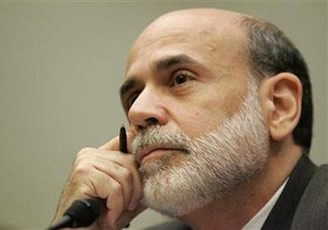
El presidente de Estados Unidos, Barack Obama, nominó a Ben Bernanke para otro período al frente de la Reserva Federal, elogiando su «tranquilidad y sabiduría» ante la crisis económica.
Obama, quien anunció su decisión el martes en Oak Bluffs, Massachusetts, donde está de vacaciones con su familia, prometió mantener un banco central «fuerte e independiente» y advirtió que la economía de Estados Unidos aún «está muy lejos» de tener un sistema financiero saludable y una recuperación plena.

Ben Bernanke terminaba su periodo al frente de la Fed el 31 de enero 2010.

«Necesitamos que Ben continúe con el trabajo que está haciendo y esa es la razón por la que he dicho que no podemos volver a una economía basada en bancos con exceso de apalancamiento, ganancias infladas y tarjetas de créditos en niveles límite», señaló Obama en declaraciones preparadas con antelación.

Bernanke fue designado presidente de la Fed por el ex presidente George W. Bush tras presidir el Consejo de Asesores Económicos.

Bernanke, miembro del partido republicano, ha sido ampliamente elogiado por economistas y Wall Street esperaba que se mantuviera en el cargo.

iSuck: Apples Five Worst Products, Ever

(By: Wired.com)

Apple, it seems, is all about the hits. The iPod, the iPhone and the MacBook are all phenomenally successful, both as designs and as commercial wins. These highlights, though, lead us to expect a lot of the company, and serve to make the misses stick out all the more. Apple has some embarrassing techno-skeletons in its beautiful white iCloset. Here are five.

The Hockey Puck Mouse

For a company that built itself on the first commercial, mouse equipped-computer, it’s odd that Apple has never made a good mouse. Even the current Mighty Mouse isn’t so mighty, pretending as it does to have just one button while actually sporting two, and inexplicably copying the Thinkpad’s red nipple instead of using a scroll wheel.

But the prize for Worst Mouse Ever goes the the “hockey puck”, which shipped with the original iMacs in 1998. Not only was it ugly, it was hard to hold due to size and shape, and frustrated users with a too-short cord. Rarely for Apple, style not only triumphed over substance, it utterly buried it.

The iPod Hi-Fi

Apple’s $350 speaker lasted just 18 months before it was taken out back, shot and sprinkled with lime. It was an odd product from Apple, which normally leaves these kinds of accessories to a healthy third-party market. The Bose-designed box had stereo speakers and an iPod dock on the top, and the high price tag and poor performance meant market failure.

Earbuds

Just like the lack of a good mouse, the dearth of decent headphones from Apple is another paradox. The sound quality may be comparable to or even better than the bundled ‘buds from other manufacturers, but they’ll break, and the $30 Apple wants for a new pair is better spent almost anywhere else.

I have gotten through a lot of them, and the longest any set lasted was a few months. This includes the latest, remote and microphone-toting model, which managed about six weeks before dying.

QuickTake

Long before Apple put a terrible camera in the iPhone, it put a terrible camera into a camera: The 0.3 megapixel (640×480) Apple QuickTake. The camera had no way to focus, and zooming was done by walking closer to your subject. Neither could you blast away like we do with the digicams of today: The QuickTake 100, built by Kodak, could fit just eight pictures into its 1MB memory.

The problem was that the market was immature, and the QuickTake was one of the first consumer digicams on the market. Compare this to the successful strategy of Apple since the iPod: Wait until the market has been established, then make a simpler, better product than anyone else.

Photo: Wikimedia Commons

iTunes

It started so well back in 2001. Apple’s jukebox software was built on the third party SoundJam which it bought the year before, and was a slick, quick and easy-to-use music player for a long time.

Then Apple decided that iTunes should be the conduit for the iPhone, and kept piling on bloated features. What had started as a pared-down, single-minded and simple application started to sync with Outlook, gained the useless cover flow view and, on the Mac at least, appeared to have a monopoly on the spinning beach-ball of death.

Worse, the iTunes Store, a fantastically user-friendly music store, gained weight in the form of the awful, hard to navigate App Store.

Of course, these days we have a new, simple and fast music app. It’s called Spotify. Apple, though, has shafted itself. The problem with selling a revolutionary device which is an iPod, a cellphone and an internet device, all in one, is that the software to support it needs to be similarly multi-tasking.

Anything we missed? While these failures are big, we have restricted them to the modern-day Apple, and ignored the Jobs-less wilderness years of beige-boxes and overpriced printers. Feel free to add more in the comments.

Banco italiano acepta quesos como garantía de préstamos

(By: Yahoo News)

No todo lo que brilla en la bóveda climatizada del banco Crédito Emiliano es oro, sino algo que en Italia es igualmente apreciado: queso parmesano en proceso de añejamiento.

Interminables hileras de hormas doradas de 39 kilos, apiladas hasta 10 metros de altura en una bóveda de seguridad, se añejan durante dos años al cuidado de empleados bancarios capacitados en el venerable arte de la fabricación del queso de Parma.

Los productores de parmesano obtienen crédito para su negocio, usando el producto como garantía mientras lo someten al prolongado proceso de añejamiento. Si bien este mecanismo no nació en la crisis actual sino que se remonta a la inmediata postguerra, los productores dicen que es más importante que nunca, ya que mantiene el crédito en marcha durante tiempos en que escasean los fondos.

«En tiempos de crisis, el sistema ayuda a los queseros», dijo Iginio Morini, vocero del Consorcio del Queso Parmigiano-Reggiano Cheese Consortium, el cual agrupa a los más de 400 productores que son los únicos autorizados a comercializar su producto bajo el nombre «Parmigiano-Reggiano».

El quesero entrega, por ejemplo, el 25% de su producción a un depósito bancario y recibe un certificado que el banco acepta como garantía de un préstamo. En muchos casos, el quesero vende el título a un distribuidor mientras el queso se añeja.

El típico productor de Parmesano que fabrica 7.000 hormas por año deja unas 2.000 en garantía. De acuerdo con el cálculo de Morini, cada horma vale unos 300 euros (425 dólares), de modo que el valor de la garantía es de unos 600.000 euros. El banco otorga un crédito de entre el 60% y 70% de ese valor, o sea unos 420.000 euros.

Ese negocio constituye apenas el 1% del ingreso anual del banco, pero es crucial para su imagen en la región, donde la agricultura es uno de los sectores clave de la economía, dijo William Bizzarri, director de la subsidiaria del Credito Emiliano a cargo de los depósitos queseros.

Guantanamo Defense Lawyers Being Investigated Over CIA Photos

(By: Wired.com)

Three defense attorneys representing detainees at Guantanamo Bay are being investigated for possibly breaking the law after they showed photos of suspected CIA personnel to their clients at the prison.

The lawyers, members of the military’s Judge Advocate General’s Corps, showed the detainees the images in an effort to identify CIA officers and contractors who may have engaged in harsh interrogation techniques with the detainees at so-called “black sites” outside the United States, according to the Washington Post.

The lawyer’s clients have been charged with terrorism crimes related to the 9/11 attacks and are being tried before a military commission. The lawyers have been considering calling the CIA interrogators to the witness stand.

The photos, some of which were taken surreptitiously outside the homes of CIA personnel, were taken by researchers hired by the John Adams Project, a project run jointly by the ACLU and the National Association of Criminal Defense Lawyers, which is helping the military attorneys defend their clients, a source told the Post.

It’s not known if the lawyers told the prisoners the images were of CIA personnel or just asked detainees if they recognized people in the pictures.

The Justice Department’s counter-espionage section is leading the investigation to determine if the lawyers broke any laws. It’s not known which laws the DoJ thinks the lawyers may have broken, but federal statutes prohibit identifying covert CIA officers. There are also rules governing the military commissions that prohibit disclosure of classified information to prisoners.

The ACLU asserts that the investigation is simply an attempt by the DoJ to intimidate the attorneys and keep the ACLU from reporting information about prisoner abuse.

“We are confident that no laws or regulations have been broken as we investigated the circumstances of the torture of our clients and as we have vigorously defended our clients’ interests,” Anthony D. Romero, the group’s executive director, told the Post. “Rather than investigate the CIA officials who undertook the torture, they are now investigating the military lawyers who have courageously stepped up to defend these clients in these sham proceedings.”

Romero told the New York Times that investigating the claims of their clients was standard to a defense attorney’s work.

“Identifying who tortured our clients and what they did to them and when is an essential part of defending their interests in these sham proceedings,” he said.